Bio
Boulder |
Boulder |
Biodegradable
Wood Composite
Climbing Hold
Alternative
Wood Composite
Climbing Hold
Alternative
For this project, we set out to create a structural biomaterial that could act as a reliable support while also being fully biodegradable.
Josh White & Uma Freitag | 6 Week Project
Why Climbing?
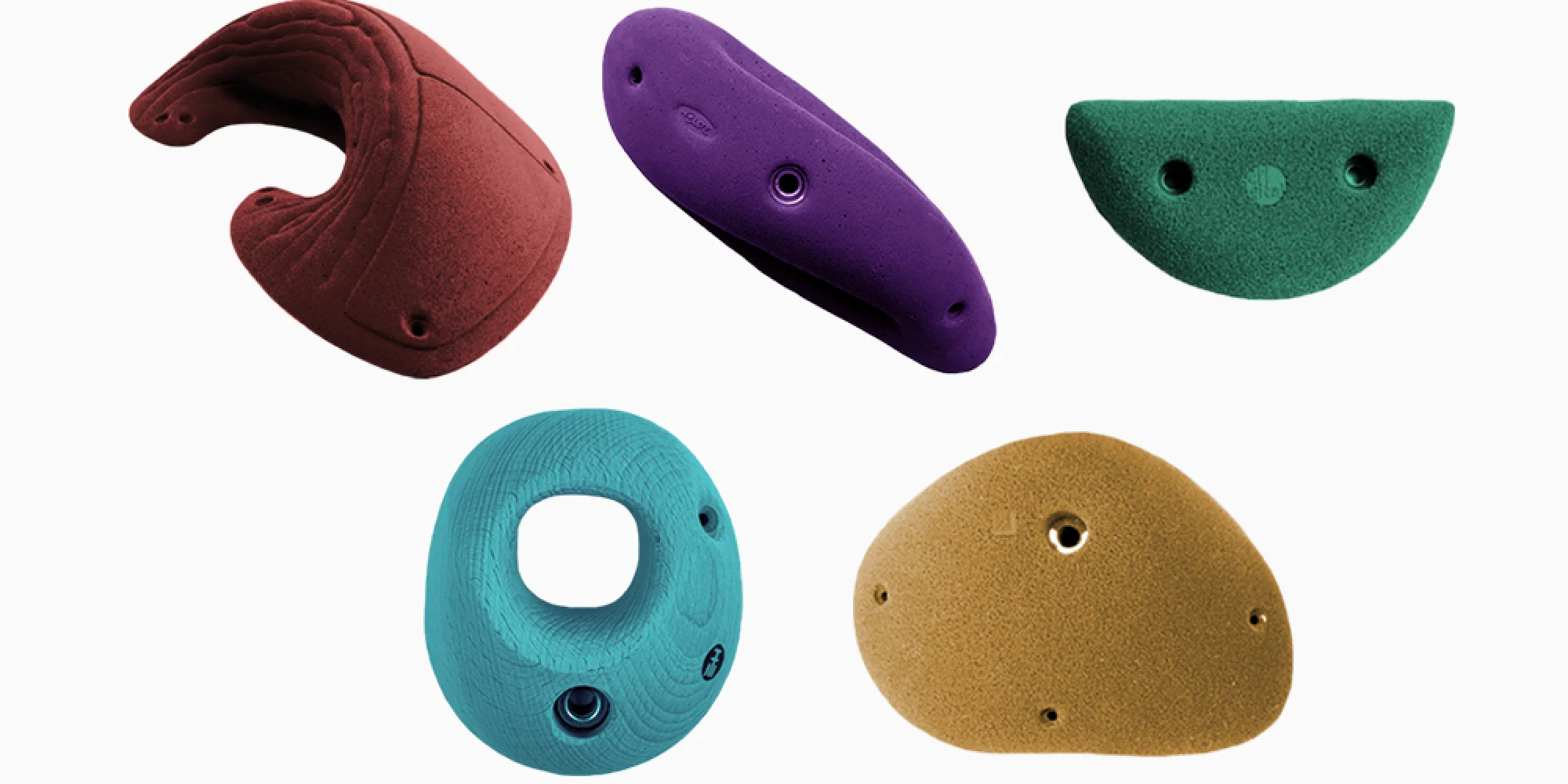
The climbing community is often deeply aligned with environmental stewardship and sustainability, rooted in the sports’ connection to nature and the outdoors. Existing indoor climbing gyms utilises petroleum-based polyurethane holds which require the extraction of fossil fuels, use of hazardous chemicals and high energy usage for manufacturing. Additionally they don’t biodegrade and are extremely difficult to recycle, often being incinerated after their short lifecycle.
870
North American Bouldering Gyms
$1.01 B
US 2025 Market Projection
8-12 K
Avg. Climbing Holds per Gym
$10
Avg. Cost per Hold
The upfront cost of purchasing climbing holds for a modern climbing gym is ~$100 K with a 10-20% annual hold replacement due to wear and setting cycles. This creates a clear market opportunity for sustainable, biodegradable climbing holds that align industry practice with climber values.
Requirements for Successful Climbing Holds
Structural integrity (sustains 3x users body weight)
Texture for grip
Longevity (1-2 years of use)
Reliability (quality consistency)
Pigmentation and vibrancy.
Texture for grip
Longevity (1-2 years of use)
Reliability (quality consistency)
Pigmentation and vibrancy.
Wood Composite Material Study

Original
Recipe 1
Recipe 2
Recipe 3
Recipe 4
Recipe 5
Recipe 6
Recipe 7
Final Recipe
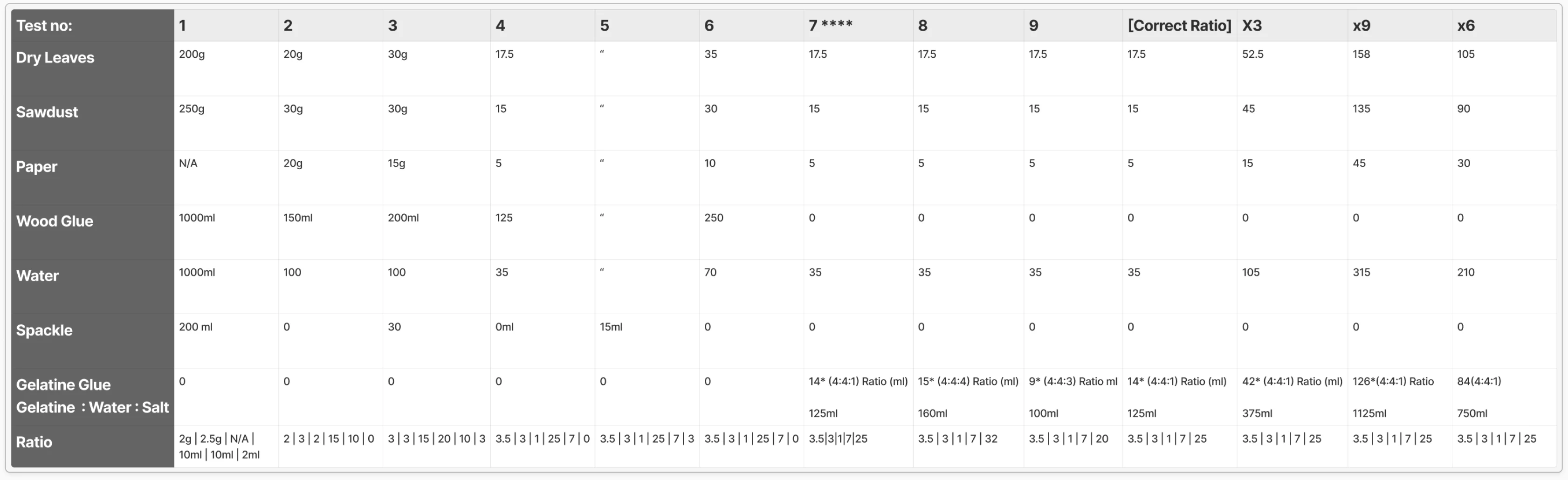
The ‘Original’ composite was extremely dense, rock hard, and easy to sand and shape, but it relied on spackle and wood glue, which did not align with our goal of creating a fully sustainable material. We reverse engineered that sample and began refining new recipes.
Recipe & Insights
Recipe |
Dried Leaves | Saw Dust | Paper | Gelatine Glue | Water | Dye
Ratio |
7 | 6 | 2 | 50 | 14 | 0.5
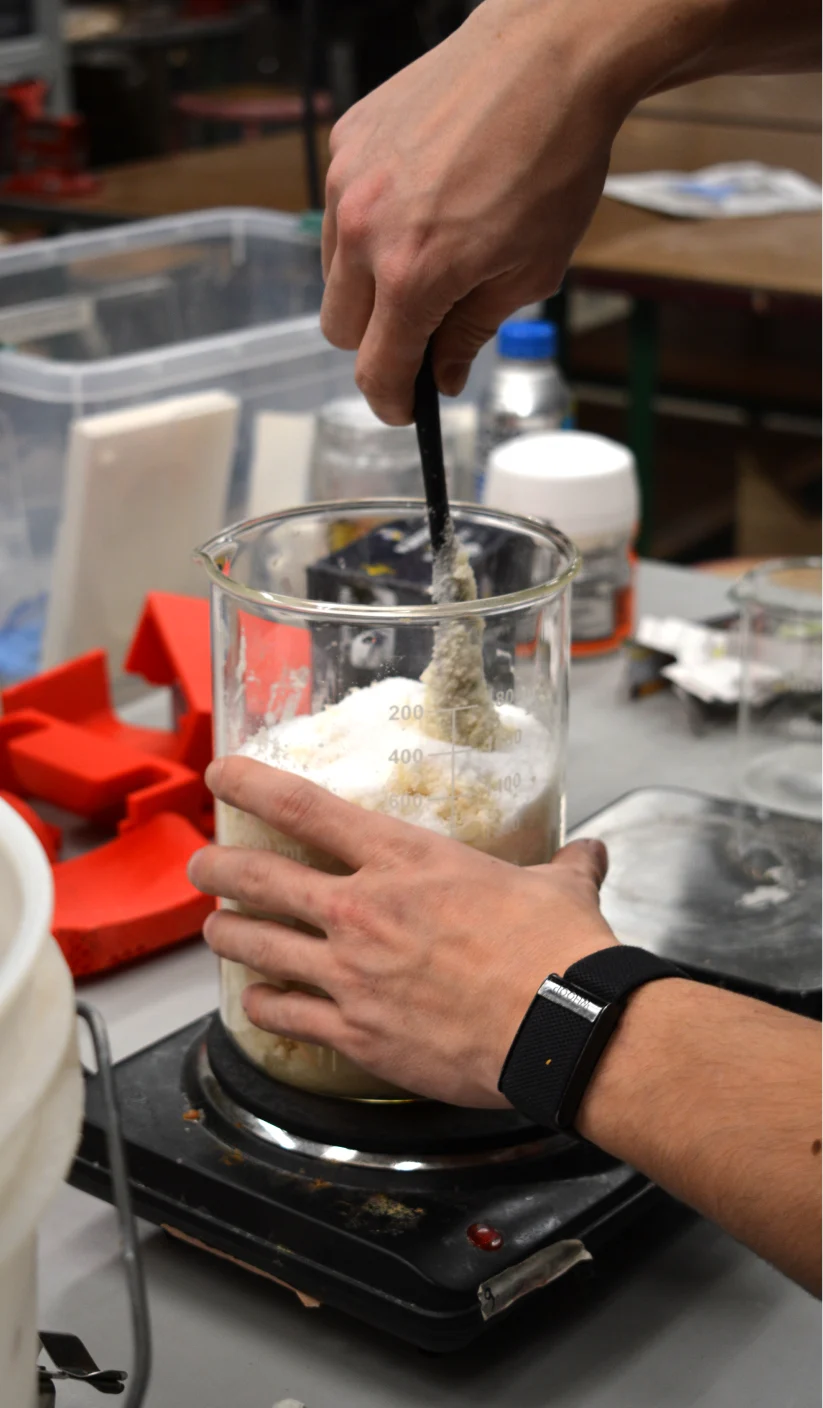
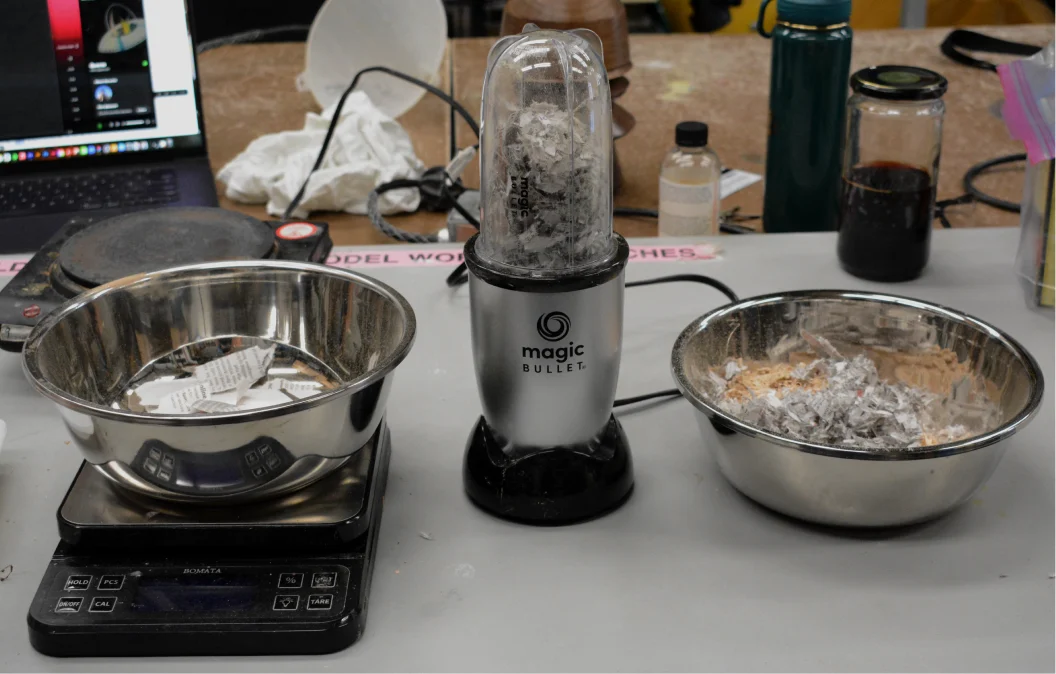
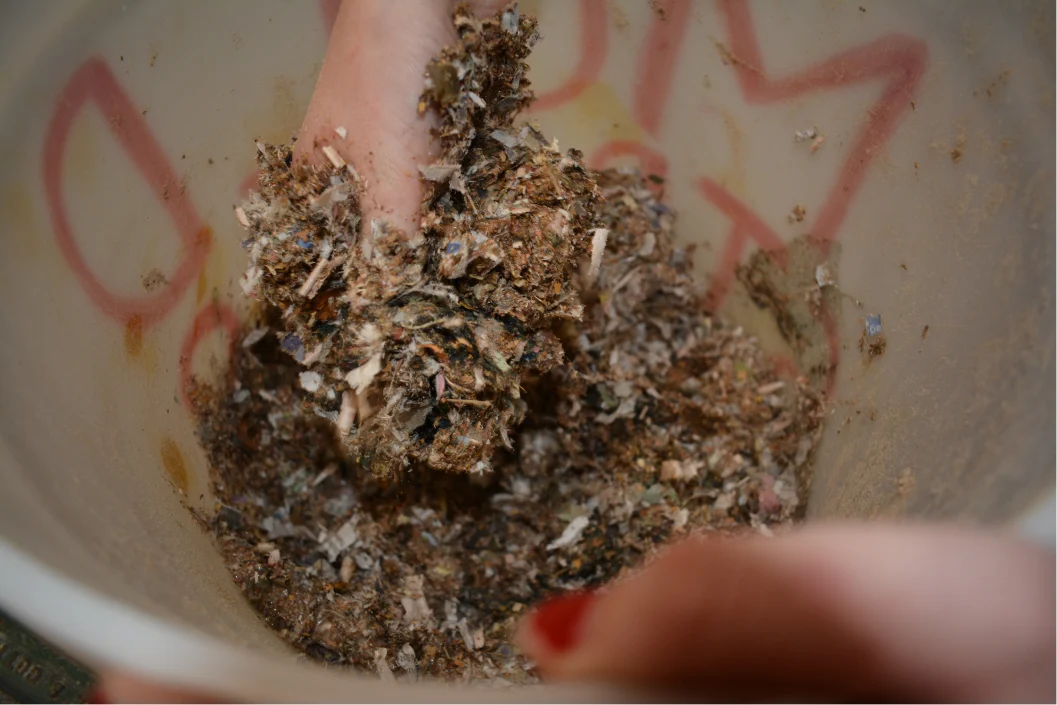
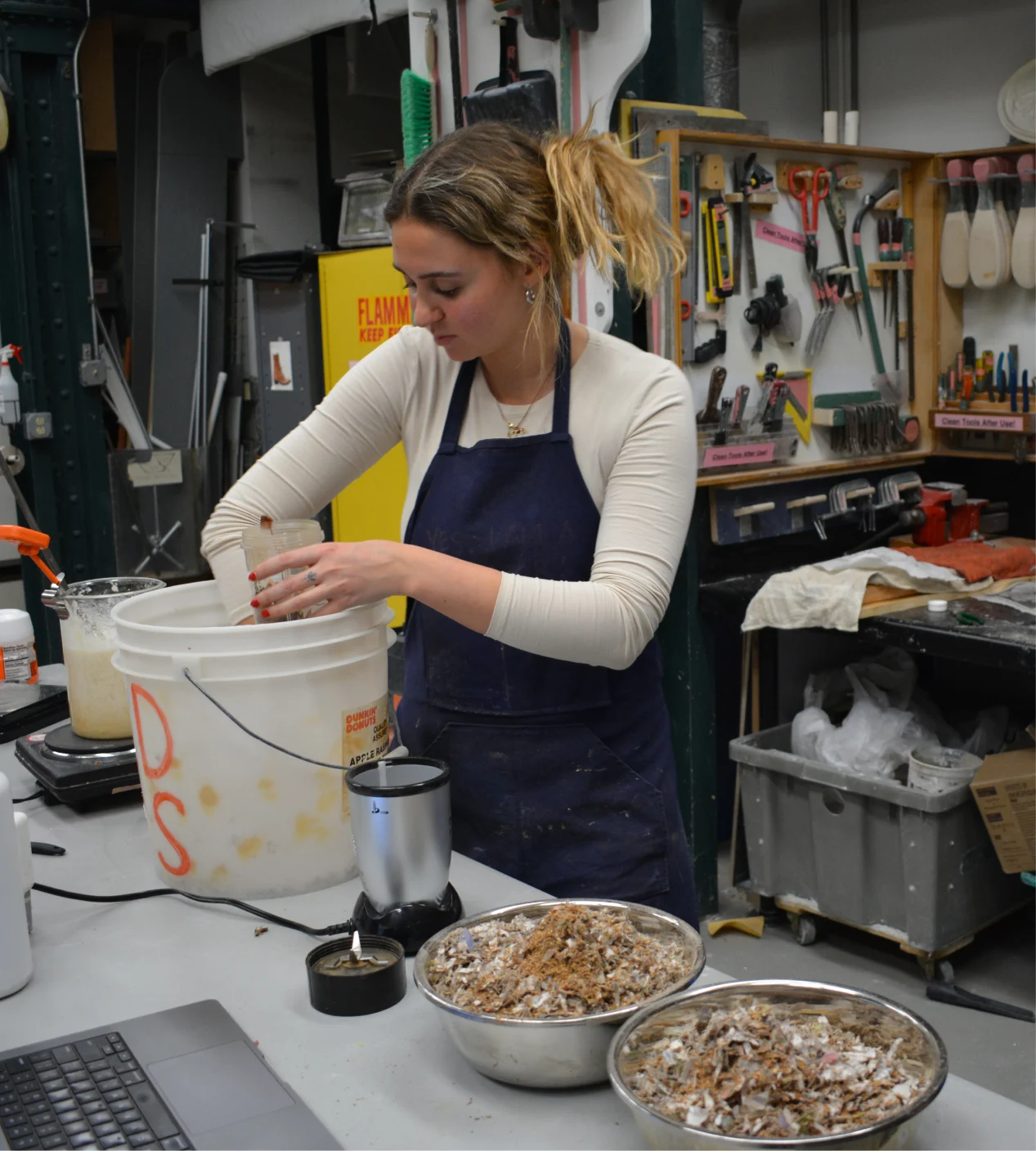
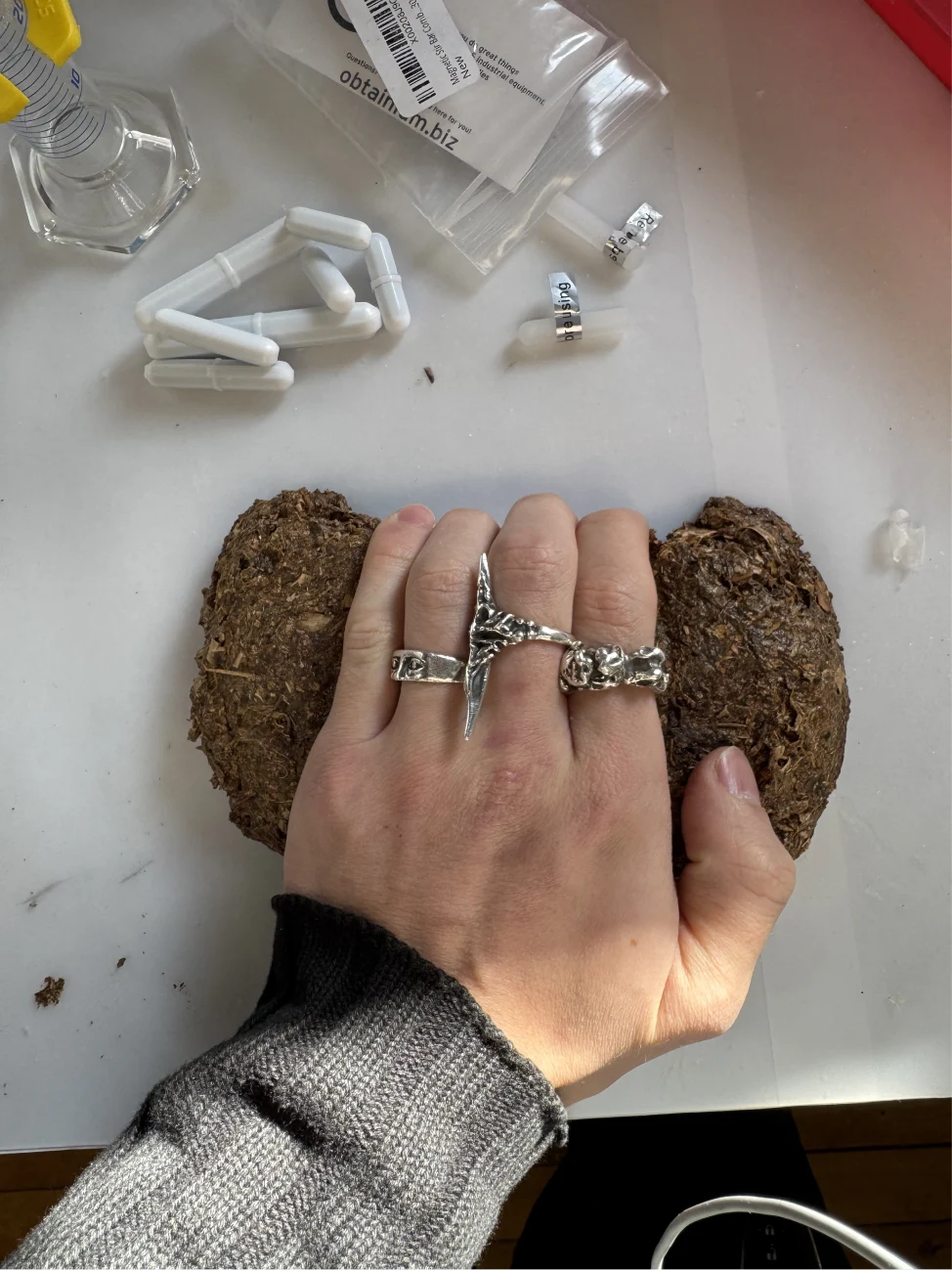
Through our material exploration process we made lots of discoveries. Leaves, sawdust and paper were blended to different sizes to allow for improved density and reduce air gaps. Gelatine replaced wood glue as the bonding agent to make our material 100% biodegradable. Water was vital for dampening our dry ingredients so they could bind with the gelatine, however, too much exponentially increased dry time. We aimed to use natural dyes, but due to their poor pigmentation, we went with industrial fabric dyes.
Moulding & Post Production
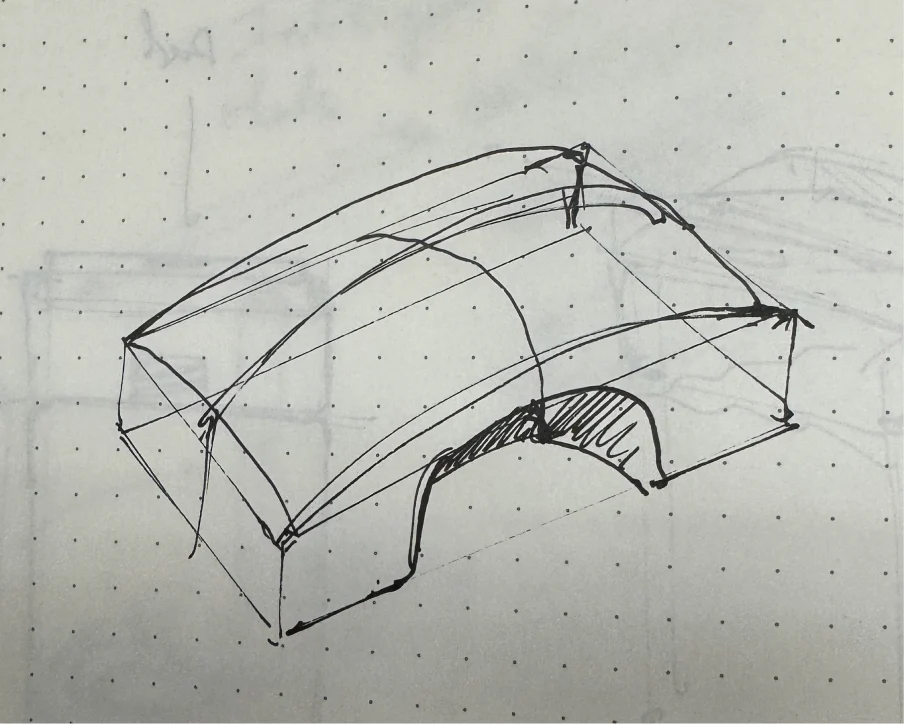
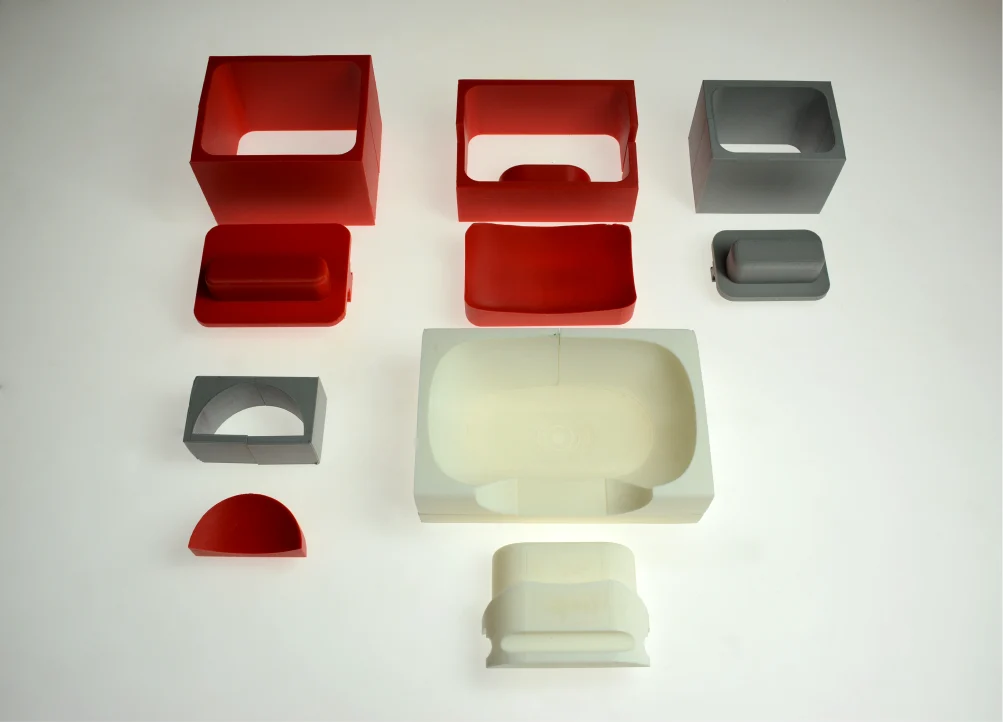
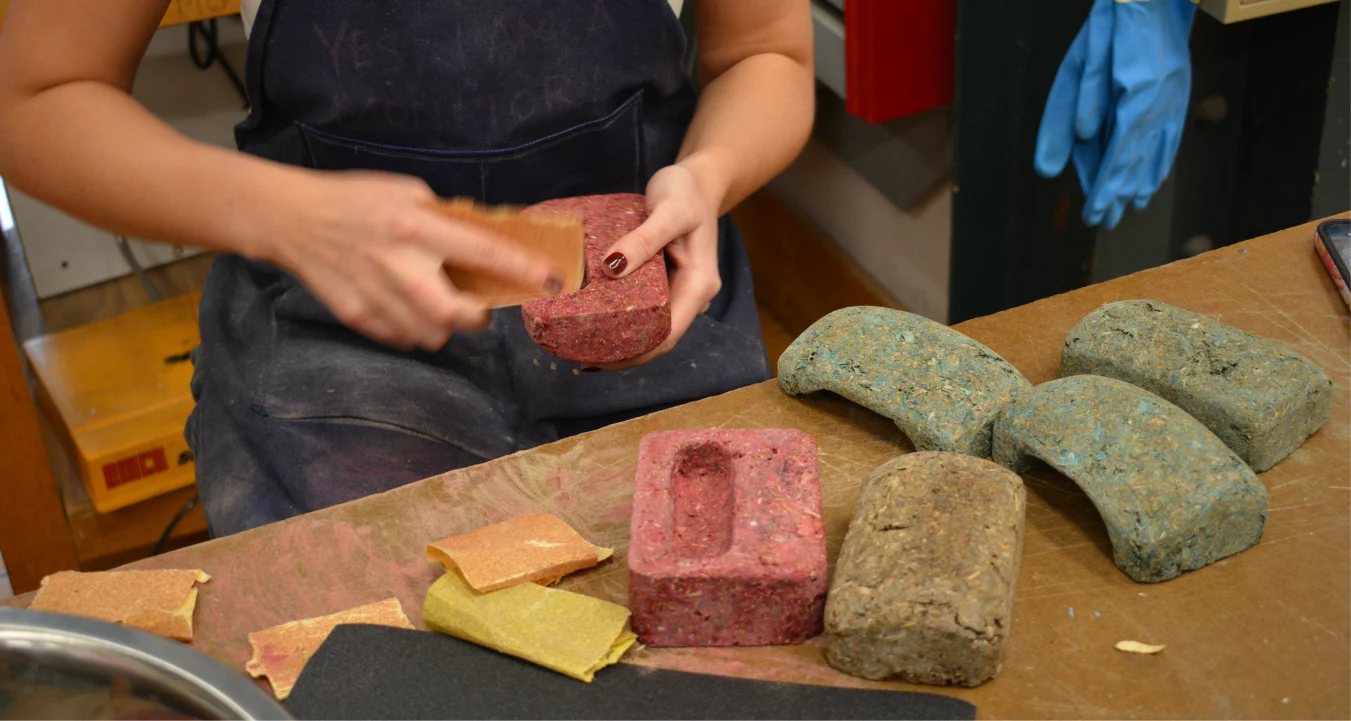
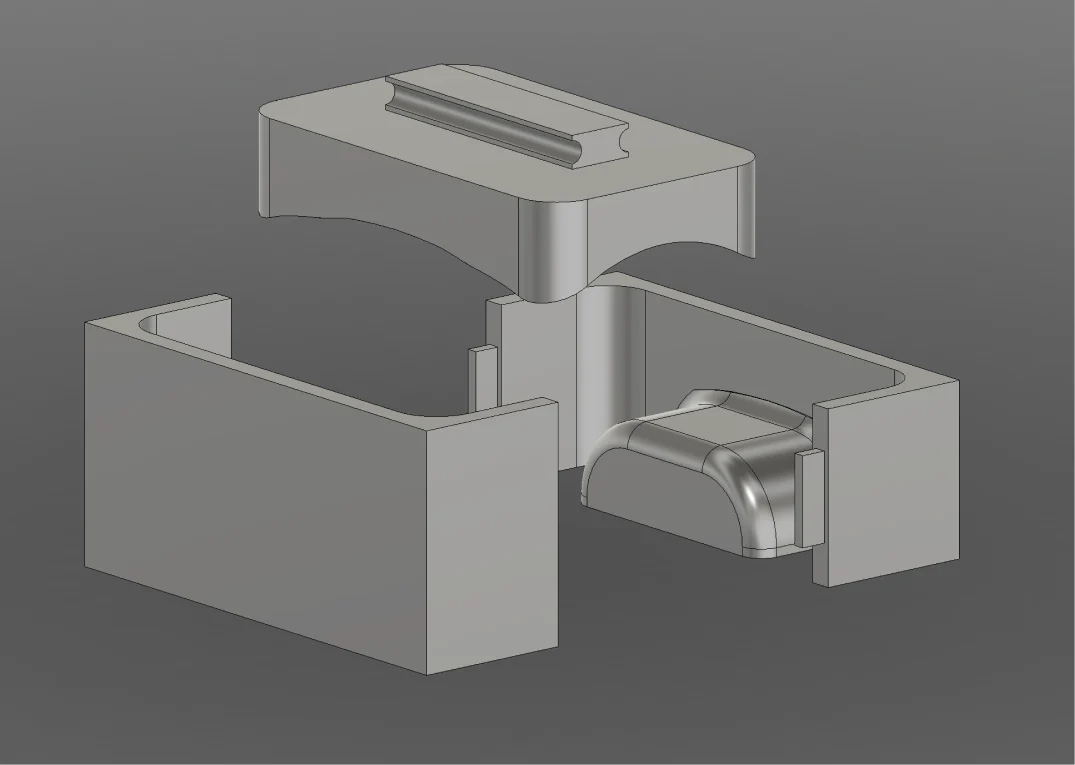
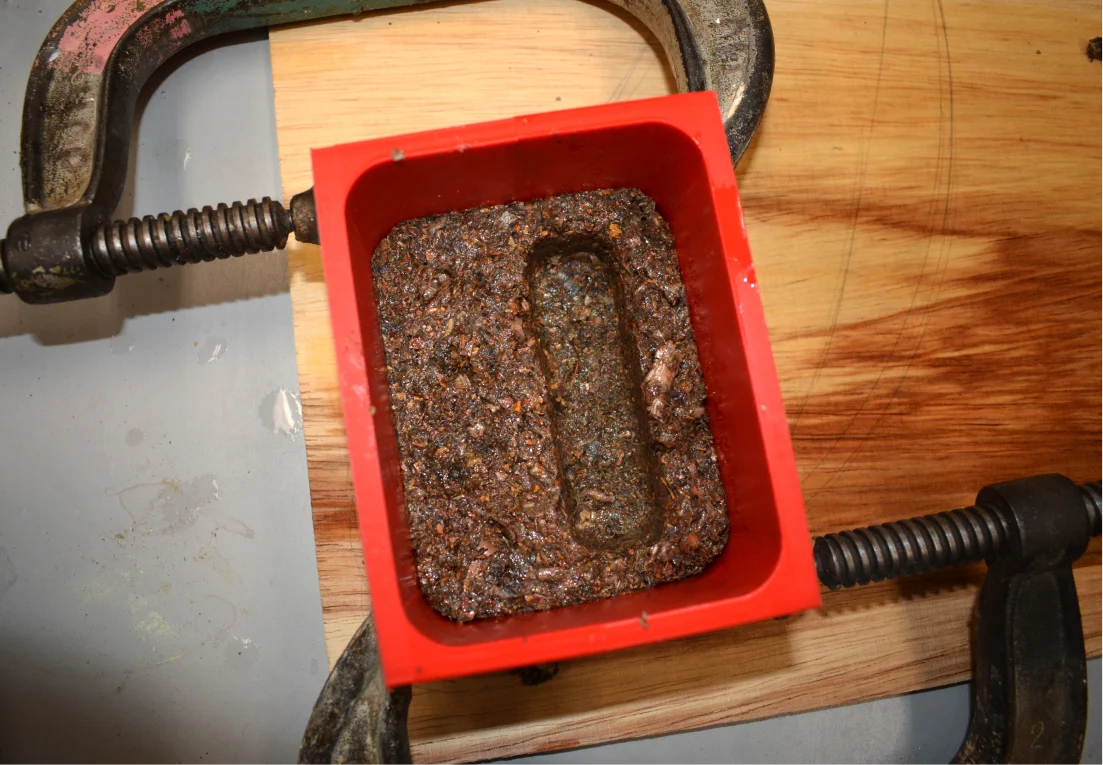
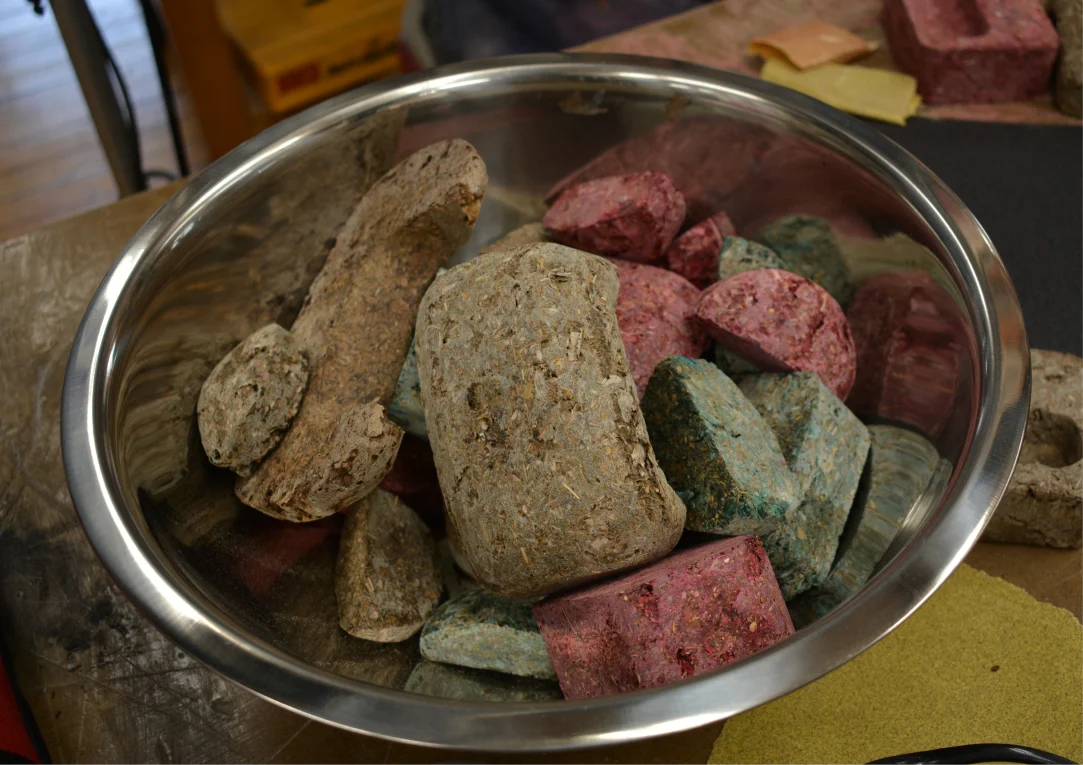
We used 3D printed multi part moulds to form each hold, wetting the insides with water as a mould release, and then placed them in a dehydrator for 48 hours. Given how dense the material was we then air dried each hold for 2 weeks before we sanded and drilled counter sunk bolt holes.
[Sketch, CAD & Moulds, Josh White]
Ergonomics & Structural Testing
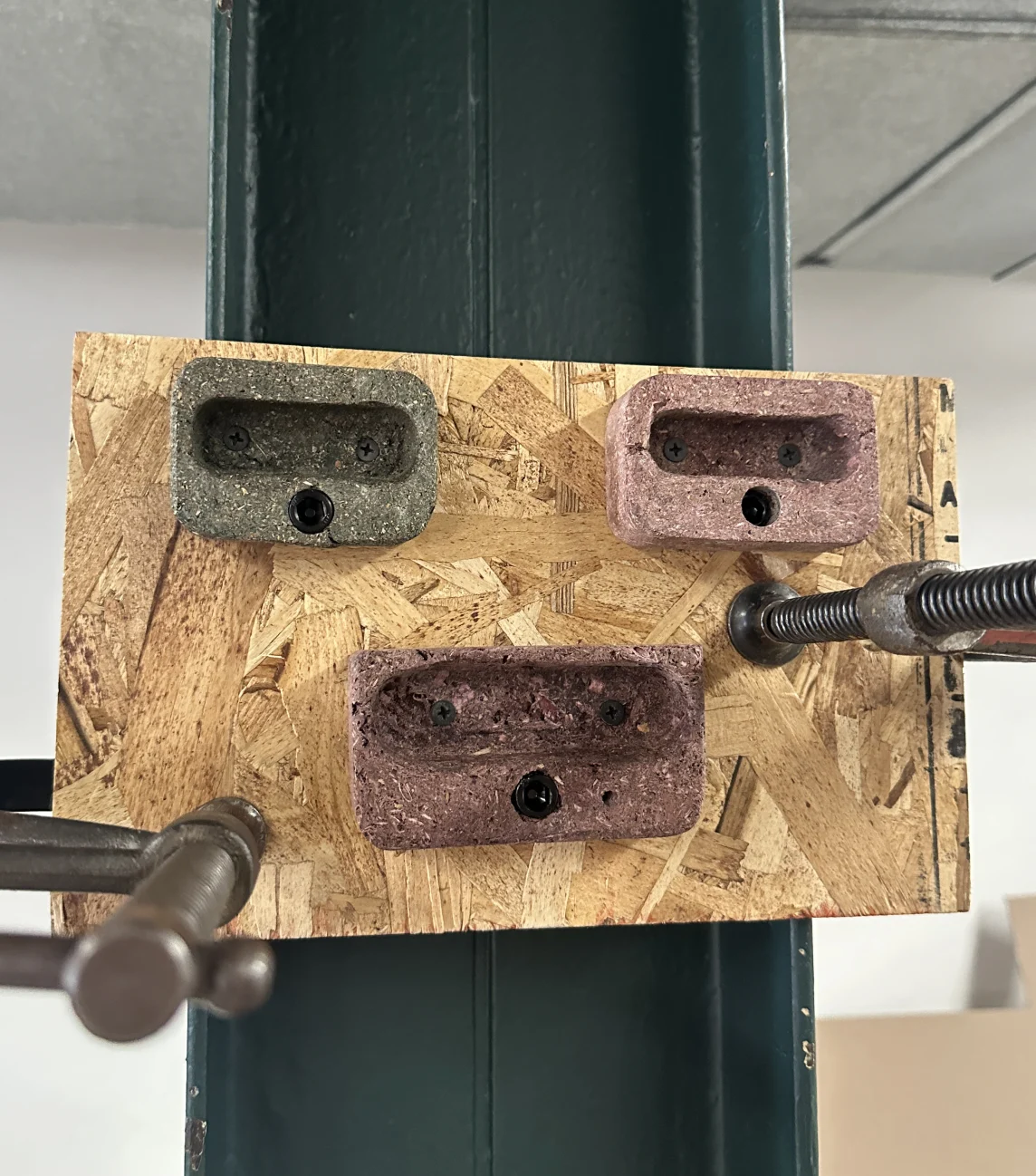
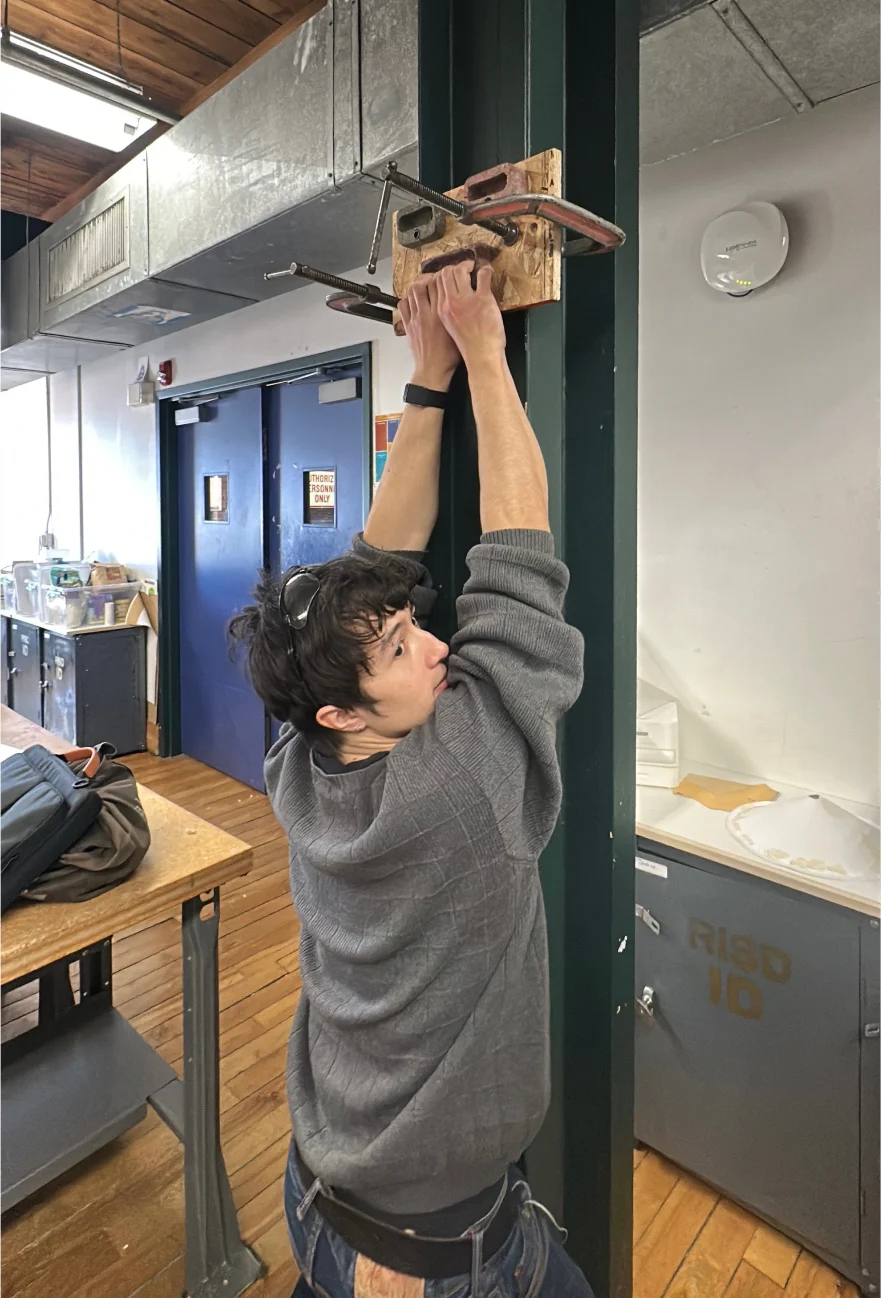
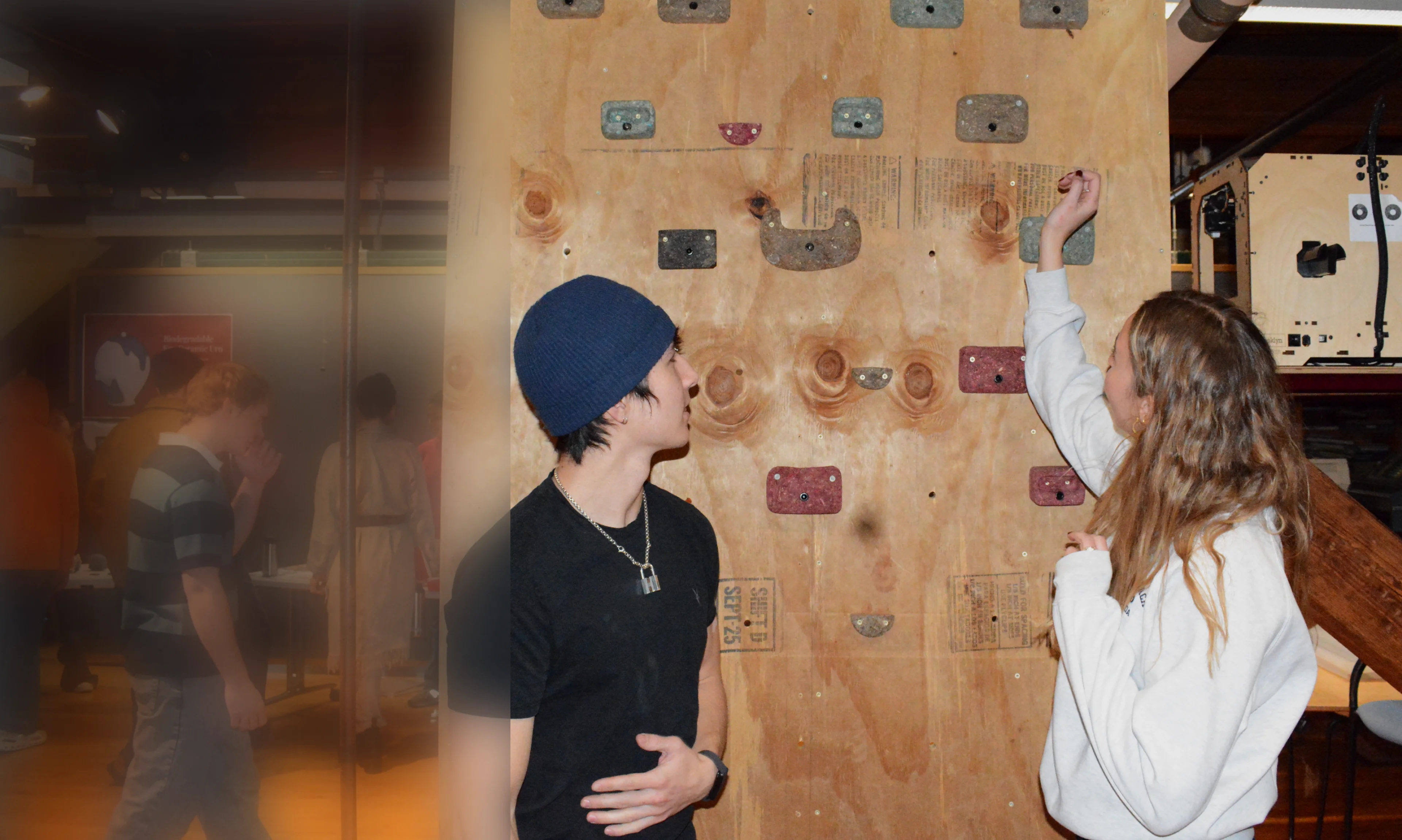
We created a sample board to test the ergonomics and structural integrity of each hold before our final batch. Given a single hold could successfully hold at least 160 pounds of downward force, this verified our material was strong enough to use in practical application.
Construction & Installation
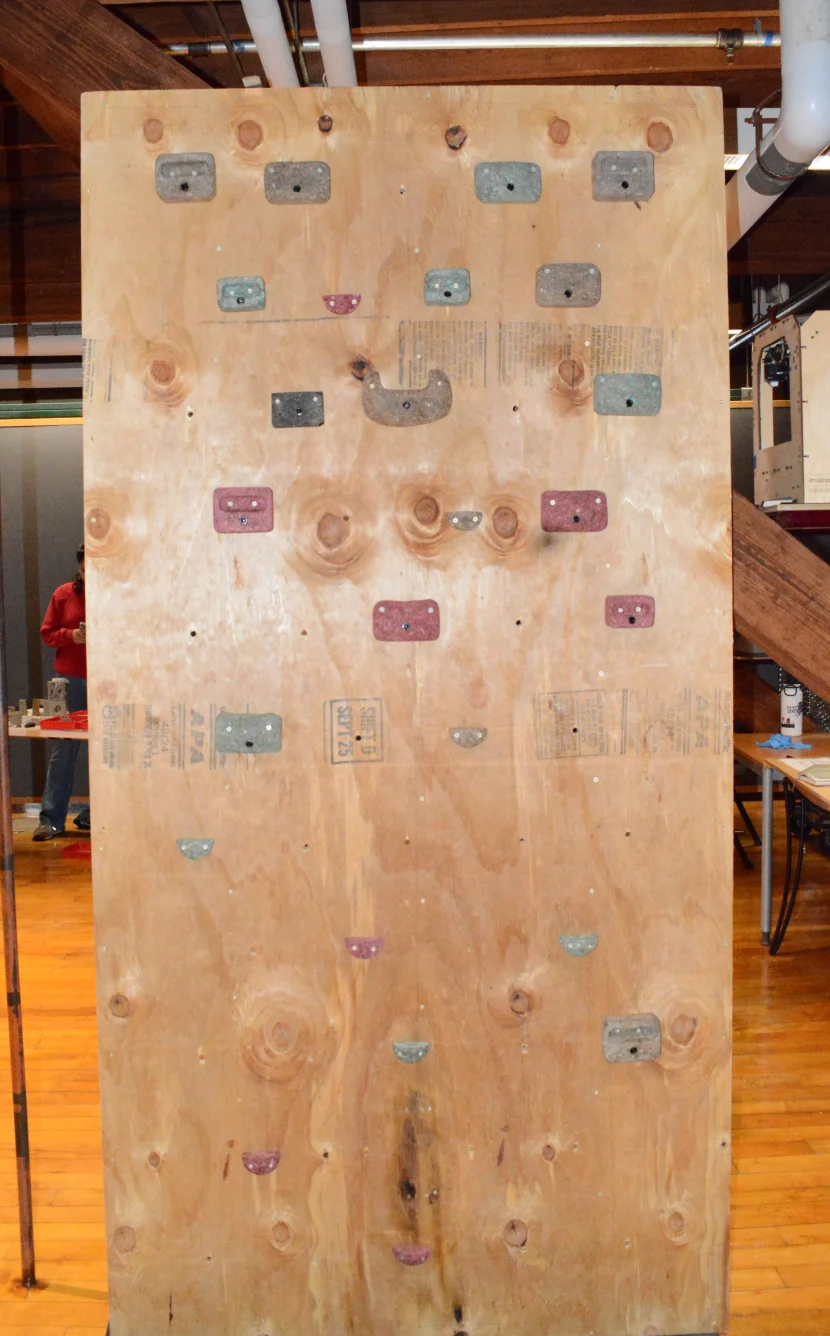
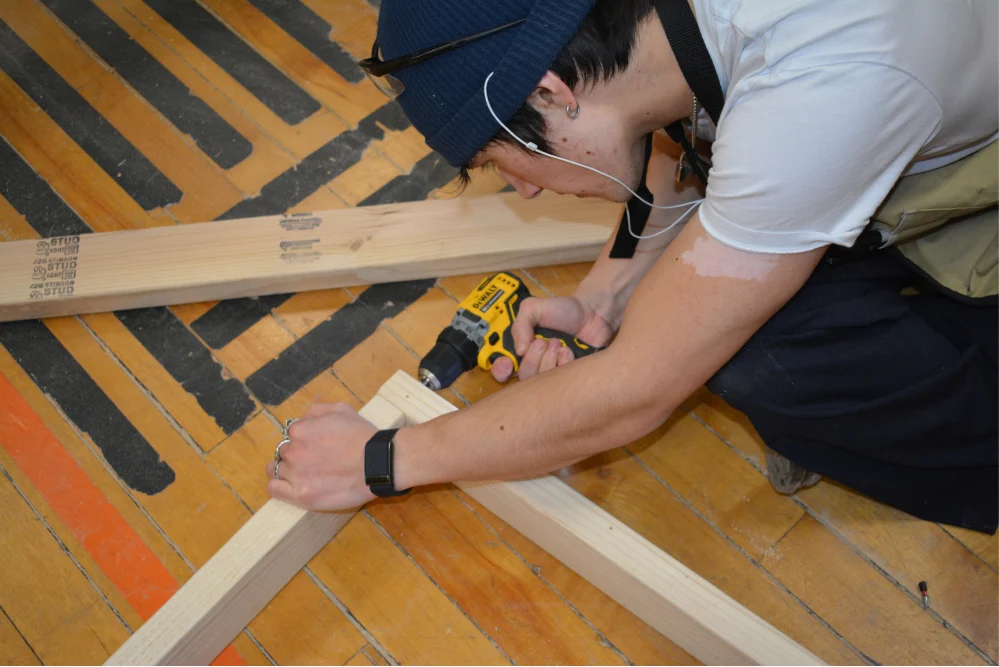
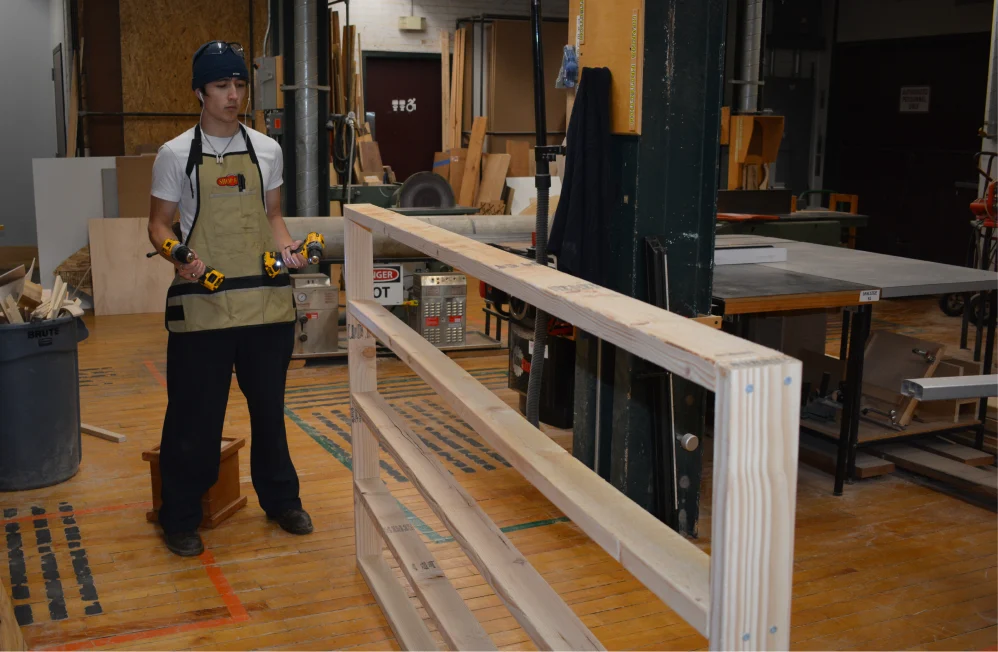
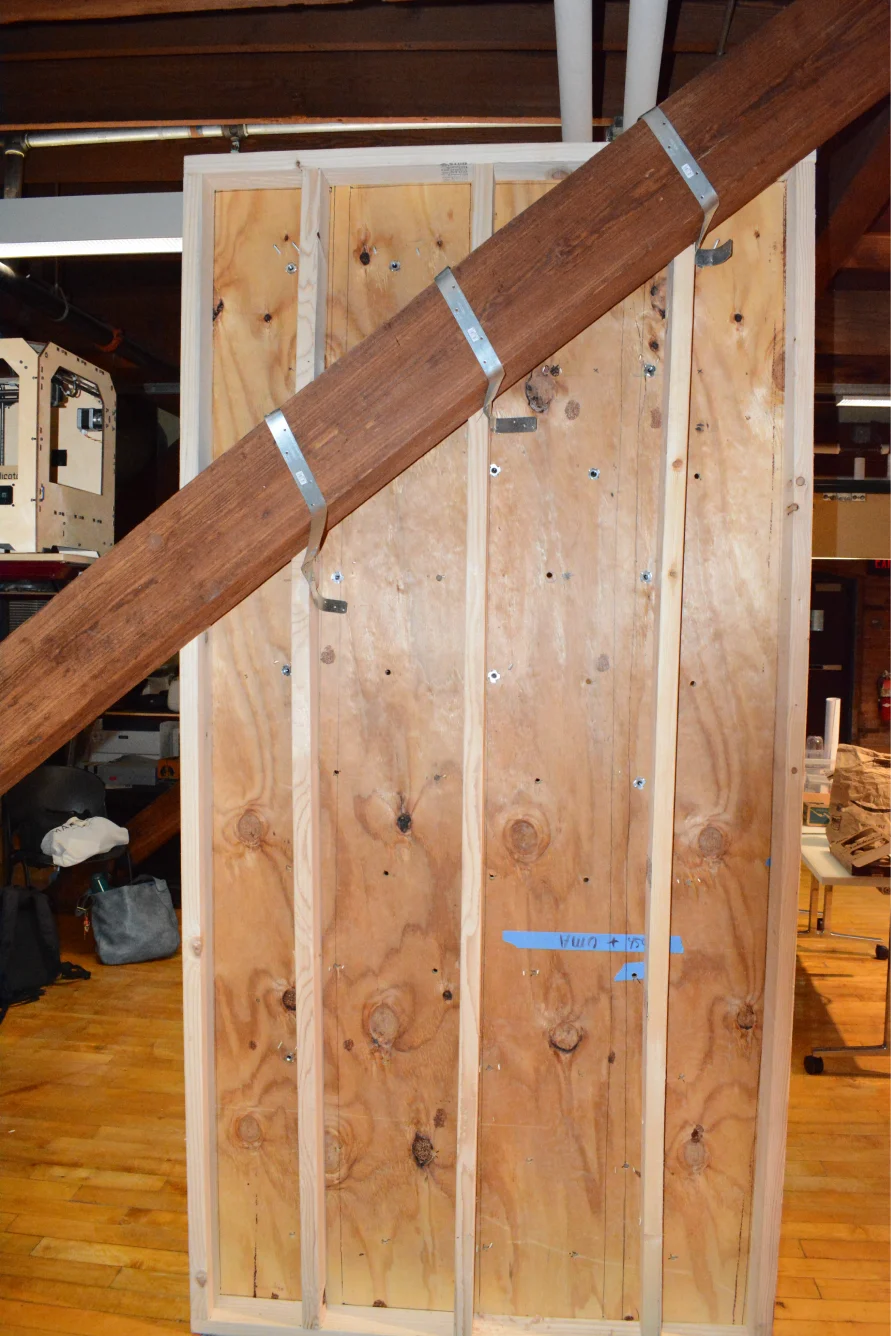
We built the wall using an 8’ x 4’ plywood sheet, 2” x 4” lumber and decking screws, mounting it to a wooden beam with steel strong ties. The holds were attached using socket head bolts and decking screws. The whole construction was placed on a rubber mat to prevent any slippage.
[Frame Construction, Josh White]
Final Wall User Testing
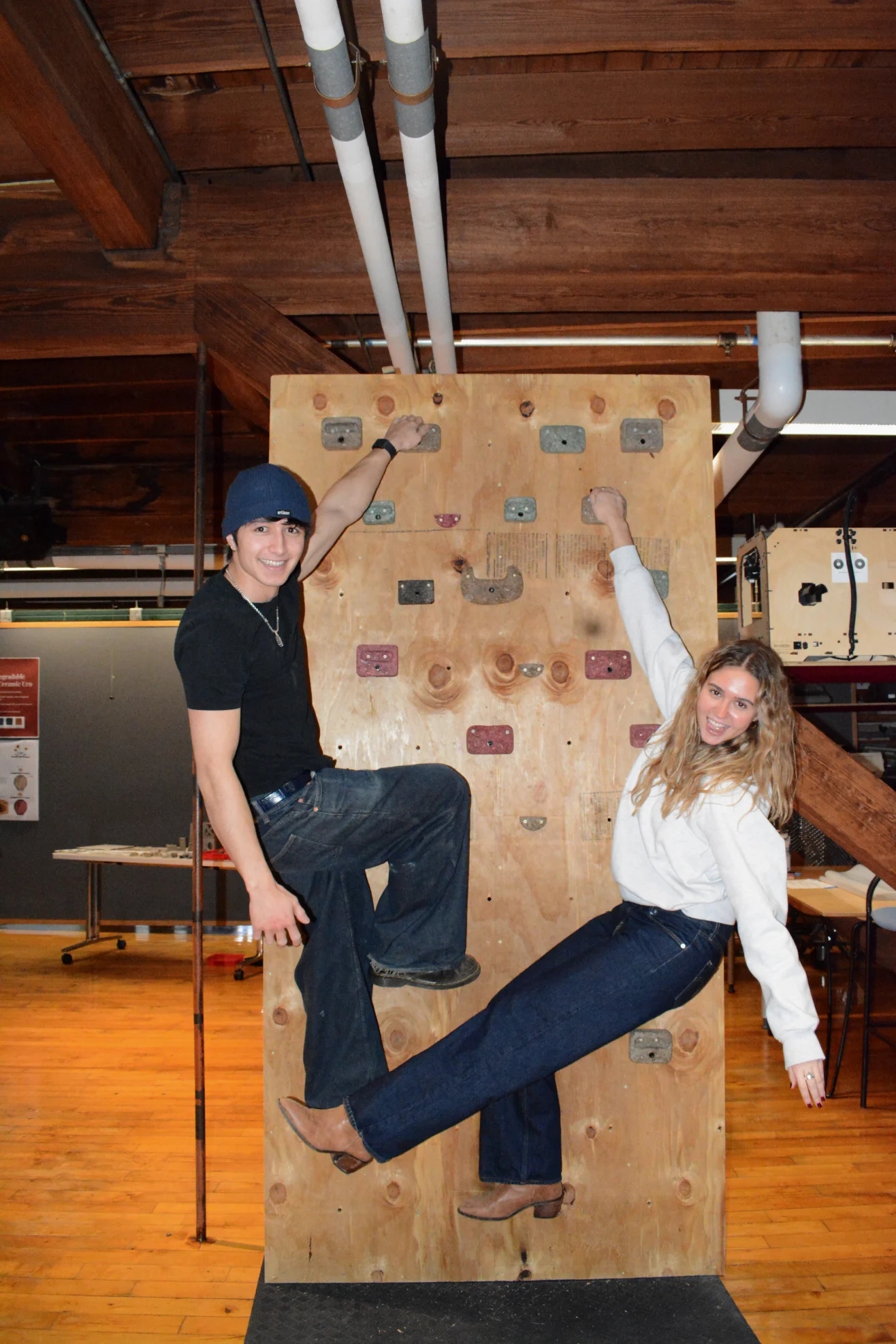
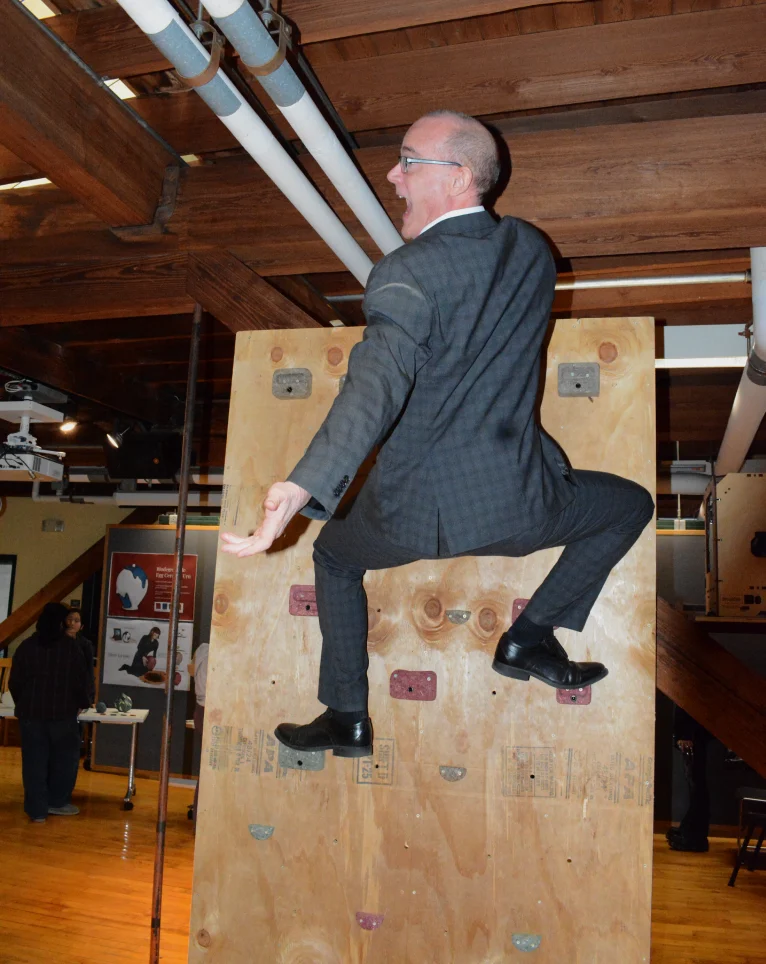
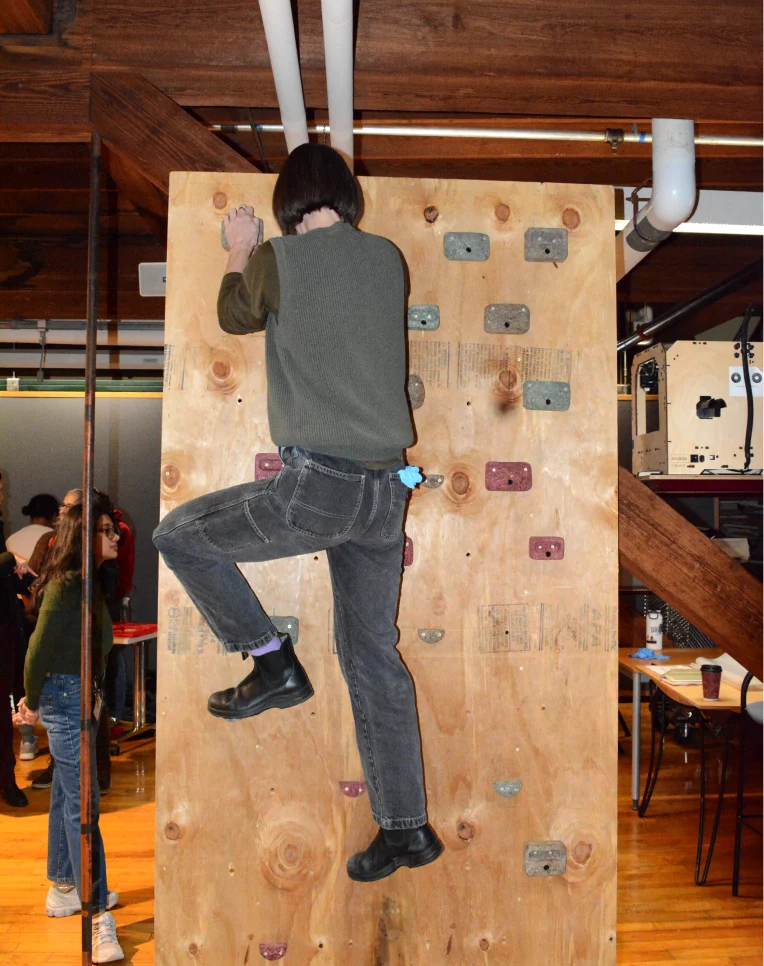
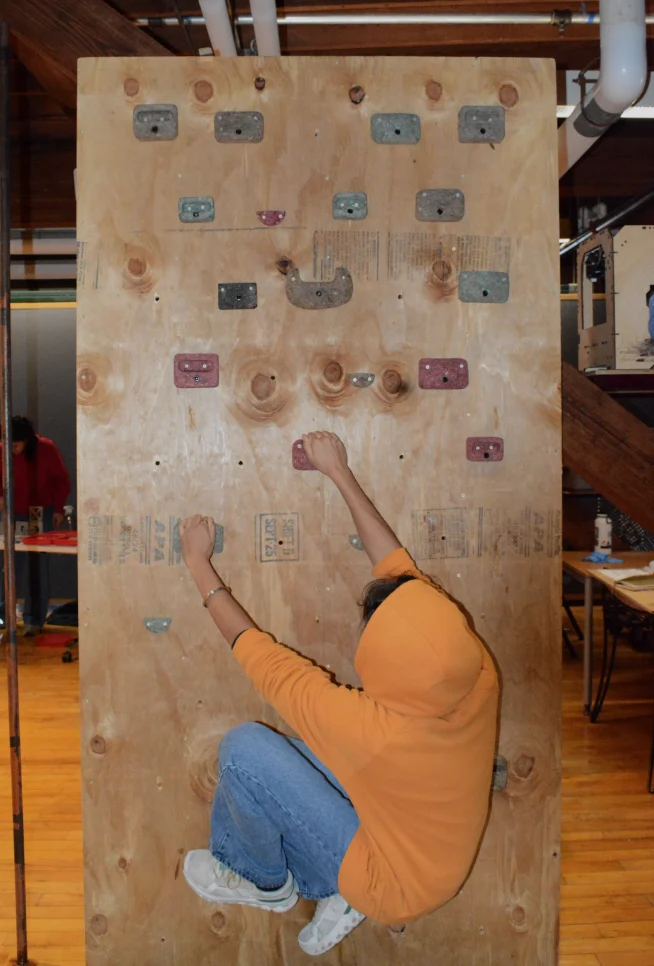
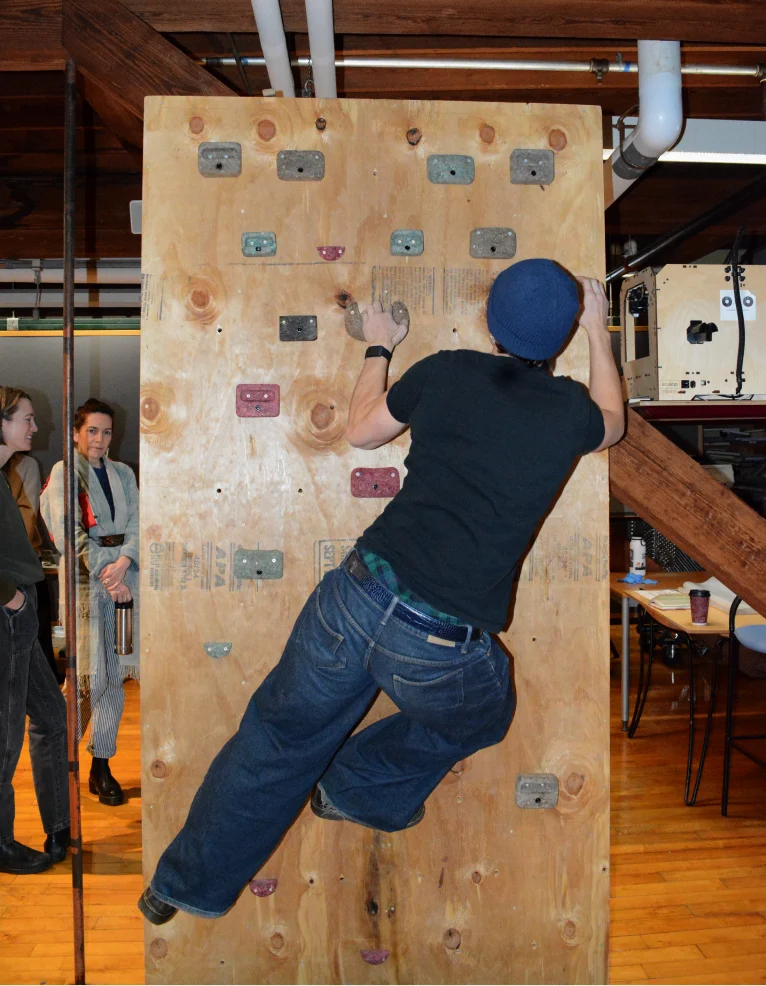
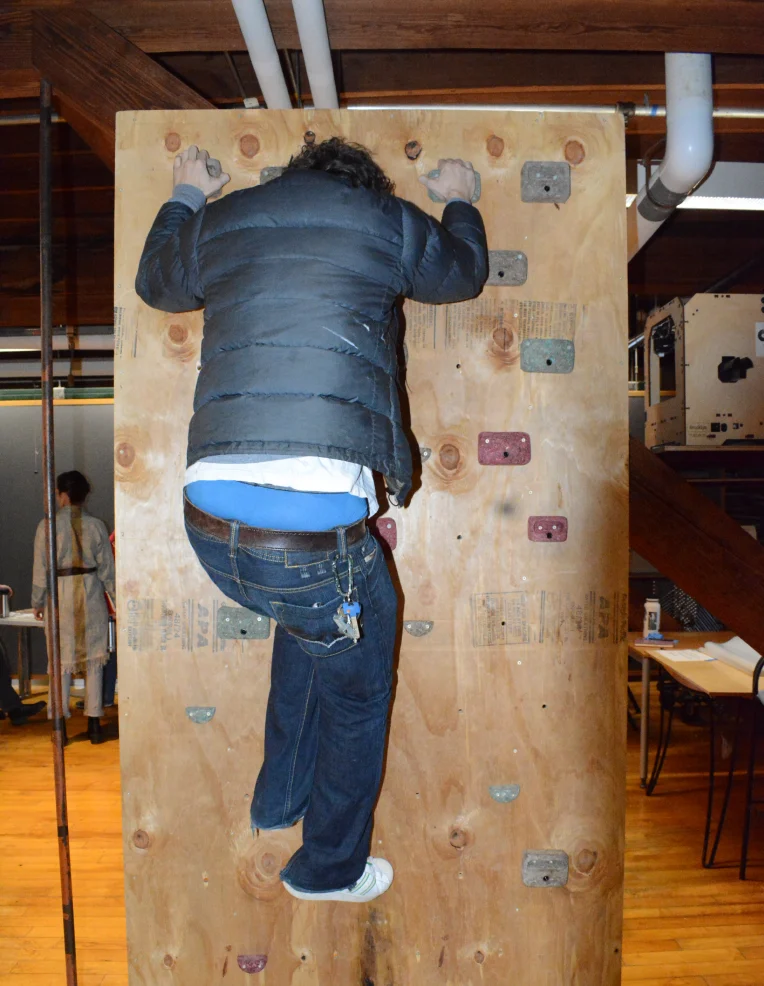
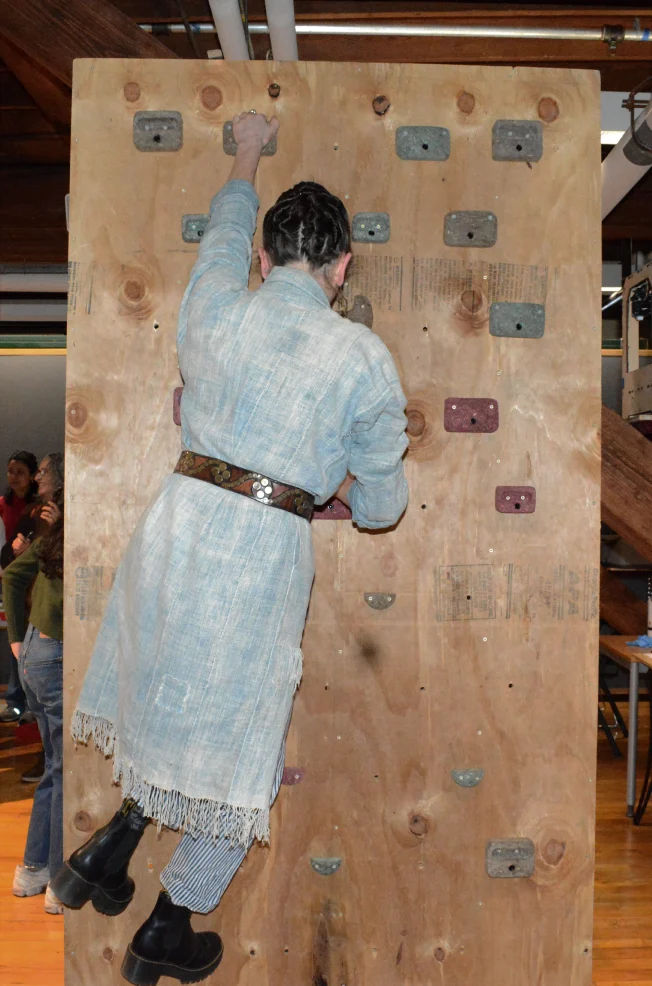
Outcome We built a full climbing wall from our biodegradable holds for our final critique, and a single hold held at least 160 pounds of downward force.
Featured RISD on Instagram: biodesign studio mini fair