Skip to content
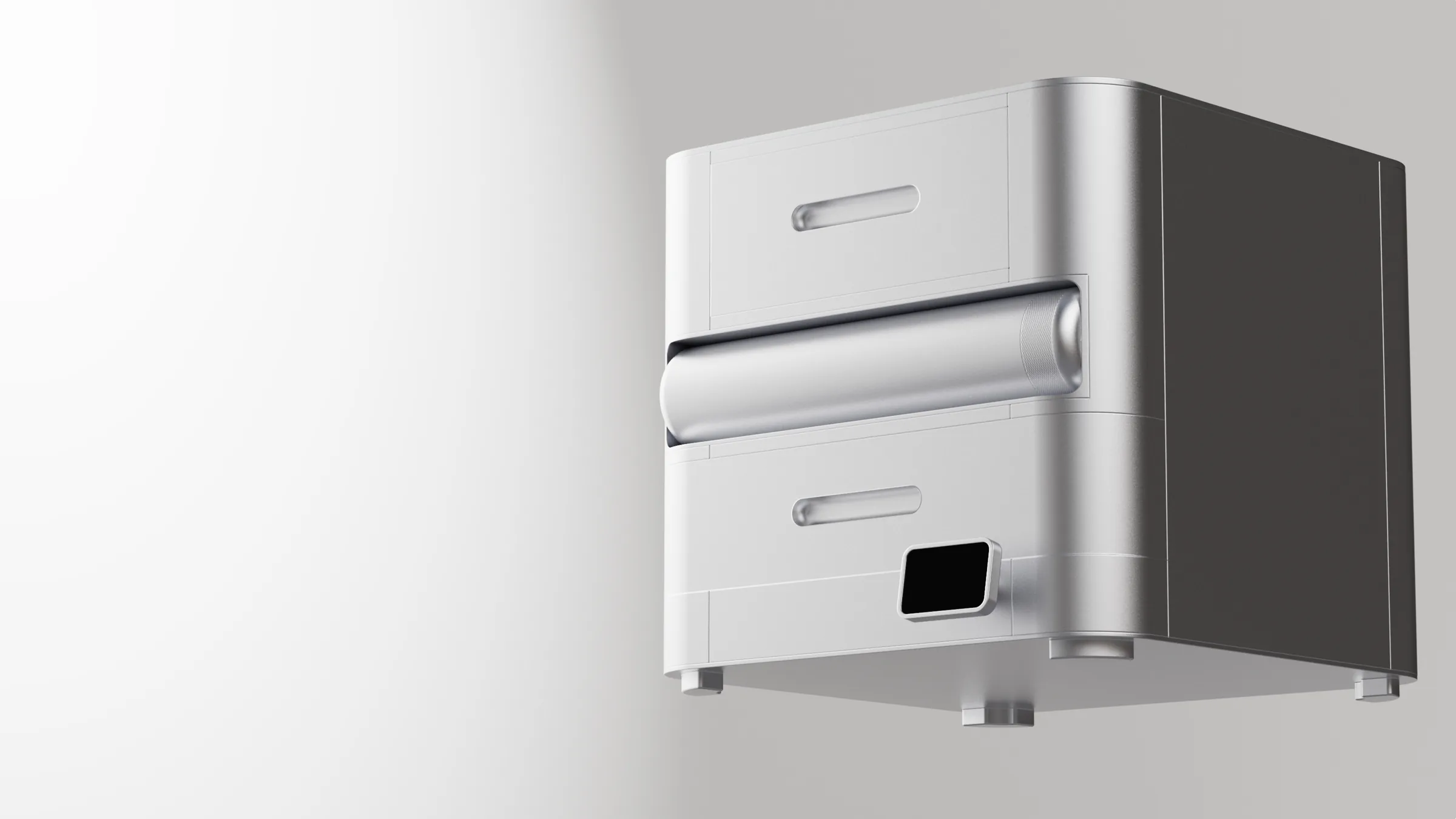
Enclave hero image

Enclave

A Regenerative Insect-Based Food Production System

In this project, we explored and developed a product system to extract edible food products from insects as an alternative food source.

Josh White & Uma Freitag & Christian Buckendorf | 6 Week Project

Initial Research

Problem Statement: Create a regenerative insect-based food production system.

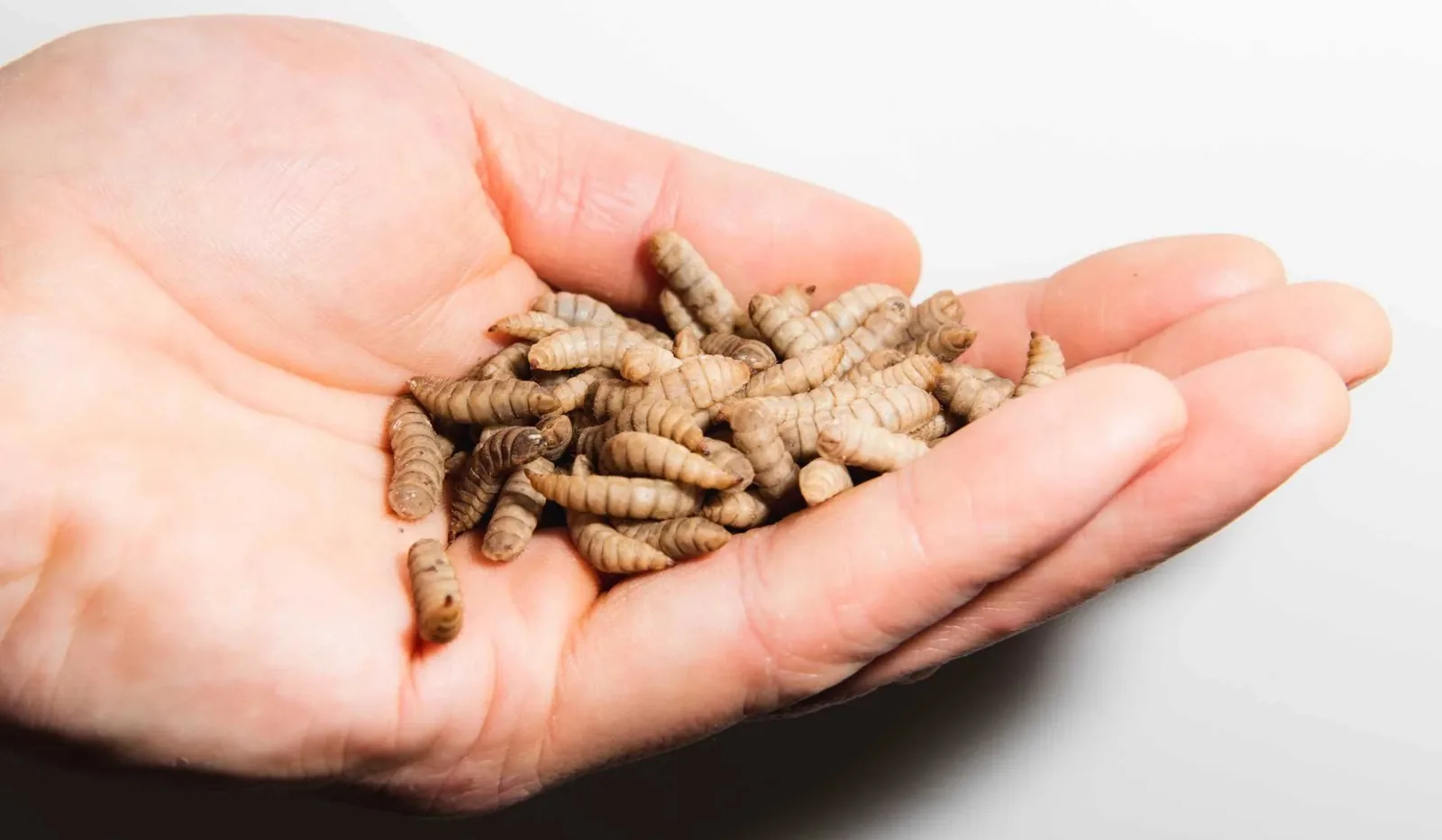
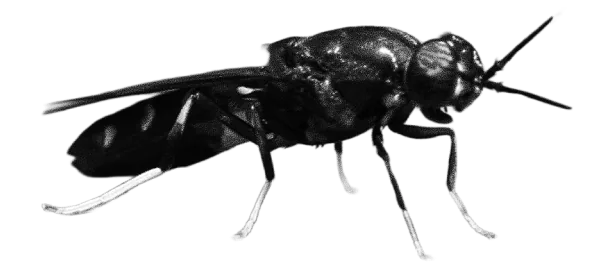
Black Soldier Fly, Hermetia illucens

Black Soldier Fly 

Hermetia illucens

Incubation Period

12–18 Days

To harvest prepupae

Behaviour

  • Only larvae consume matter
  • Larvae can’t climb

Feed

Diverse feeding

  • Veg scraps
  • Grains
  • Coffee grounds

Nutrient Yield (Body Mass)

  • Protein (40–45%)
  • Fats (30–35%)

Egg Stage

3–4 Days

Moisture dependent

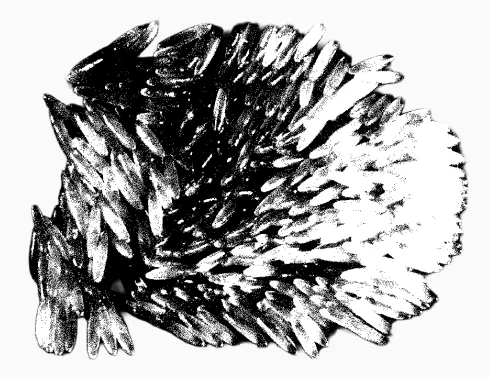
Black soldier fly eggs

Larvae Stage

14–18 Days

Heavy feeding and growth

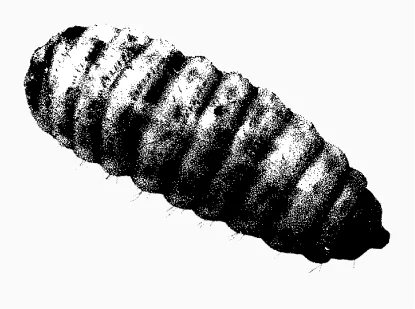
Black soldier fly larva

Pupal Stage

7–14 Days

Stops eating, seeks a dry place, metamorphosis

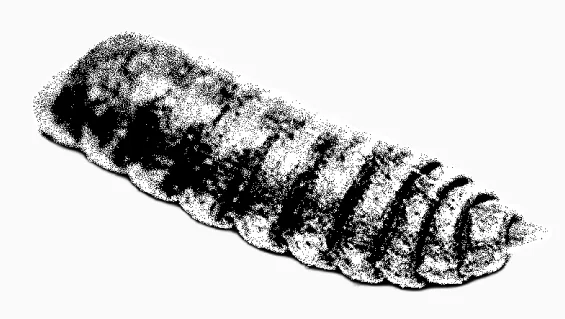
Black soldier fly pupa

Adult Soldier Fly

5–8 Days

No feeding, only reproduction

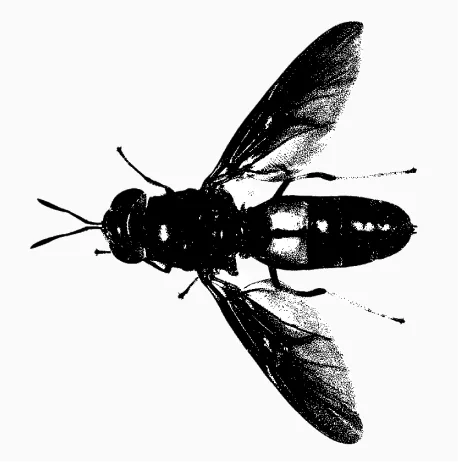
Adult black soldier fly

Black Soldier Fly Life Cycle

[Graphics, Josh White]

Market Research & Takeaways

DIY Farming
Industrial Farming

DIY FarmingDIY farming is accessible but unpredictable.Manual processes limit scalability and consistency.

Industrial FarmingIndustrial farming is efficient but expensive.High automation increases setup cost and complexity.

OpportunityDesign a compact system that blends DIY simplicity with industrial reliability.

Systems Design

The Enclave breeds black soldier flies in a closed loop. Eggs hatch into larvae in the feed tray, move up the harvesting ramps as prepupae and are separated by the harvester; a tenth are kept to repopulate under the grow light. The harvest is washed, blanched and dehydrated, and the frass-rich soil feeds the crops that feed the larvae.

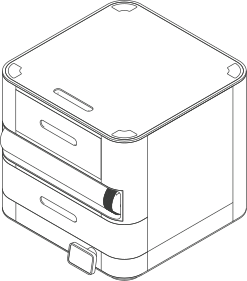
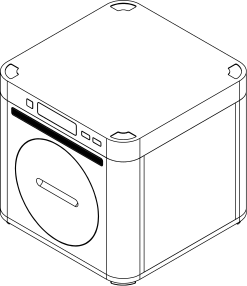
The Enclave breeding unit

Eggs

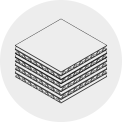
Egg Stack

Stacks of cardboard act as a repository for BSF eggs.

Larvae

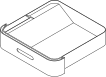
Feed Tray

Filled with clean soil and food. Water administered through humidity control.

Pre Pupal

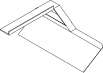
Harvesting Ramps

Prepupae seek areas of low moisture to molt. Harvesting ramps allow movement out.

Pupal

Harvester Separation

Pupae enter the harvester. Rotation divides the batch 9:1 [Harvested : Repopulators].

Adult Flies

Grow Light

Grow lights simulate natural sunlight, triggering the adult flies to repopulate.

Frass Rich Soil

Soil from the feed tray is filled with frass waste and rich in nutrients.

Plant Fertiliser

Frass-rich soil can be used as plant fertiliser, feeding crops.

Crops

Fertiliser helps grow leafy green crops like lettuce: high in moisture, quick to grow and easily digestible.

Feed

Crops can be harvested and fed back to the black soldier fly larvae, closing the nutrient loop.

The washing and dehydrating unit

Stage I: Water Tumbling

Removes dirt and impurities. Water is recycled from the collection drum through an activated carbon filter.

Stage II: Blanching

Water is boiled in the collection drum, sanitising the prepupae and halting biological activity.

Stage III: Dehydration

Blanched BSF are dehydrated with a controlled silicone rubber heater. The food product is now shelf-ready.

Consumption

Dehydrated pupae are ready to be processed or eaten. Package and store in an airtight container; freeze for long-term storage.

To Feed Tray

[Graphic, Josh White & Uma Freitag]

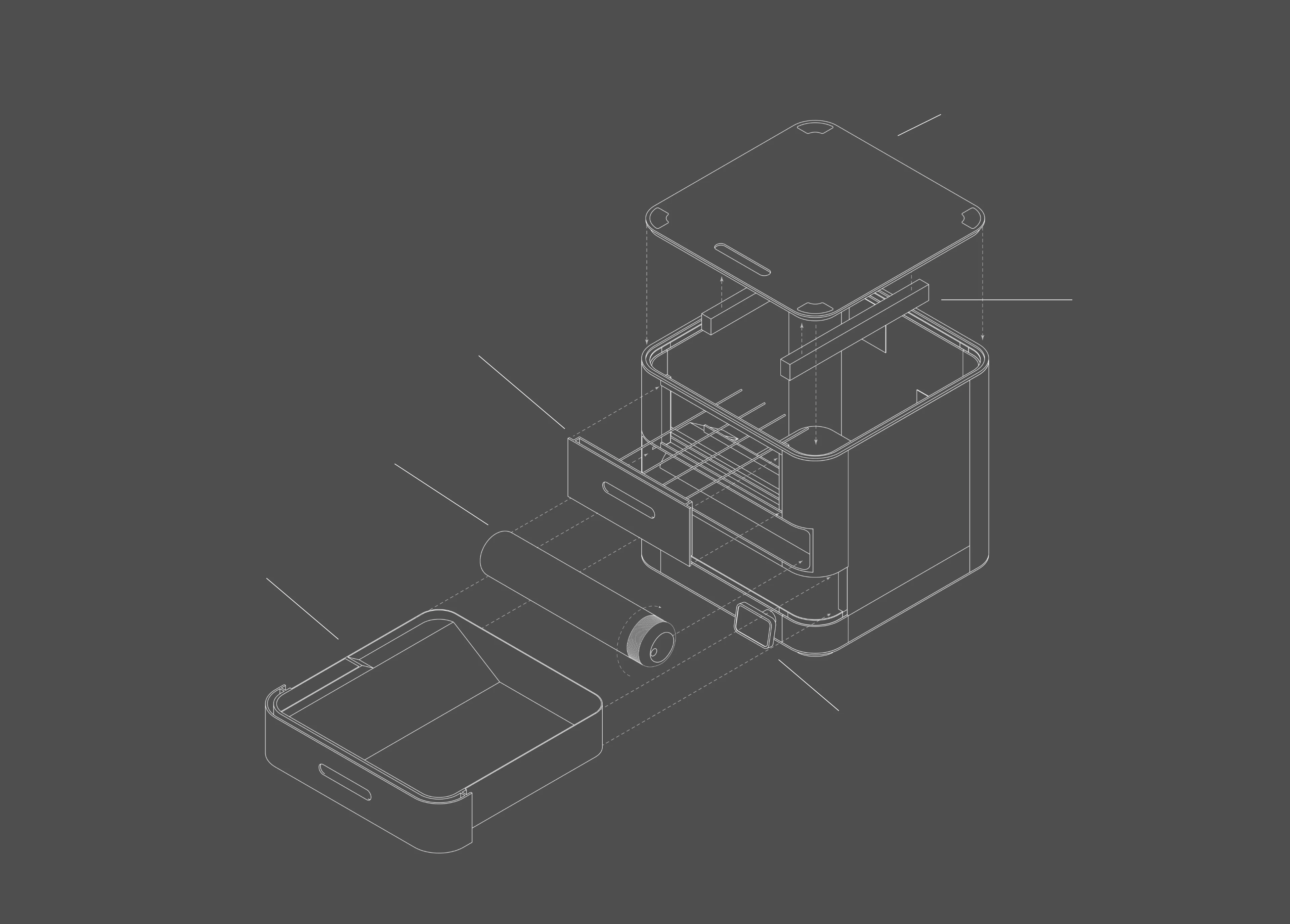
Key Components Diagram

Exploded line drawing of the Enclave unit with leader lines to each labelled component
Feeding Tray |
Handle
Harvesting Ramps
Egg Door |
Handle
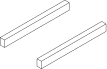
Prongs for cardboard
egg hatchery
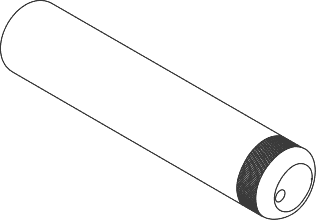
Harvester |
Rotation to harvest
Internal sorting
mechanism
| Monitor Screen
Interface to analyse internal
environmental data
| Grow Lights
Automated to stimulate
reproduction
| Container Lid
Handle
Inset foot references
[Graphics, Josh White]

Mechanisms & Features

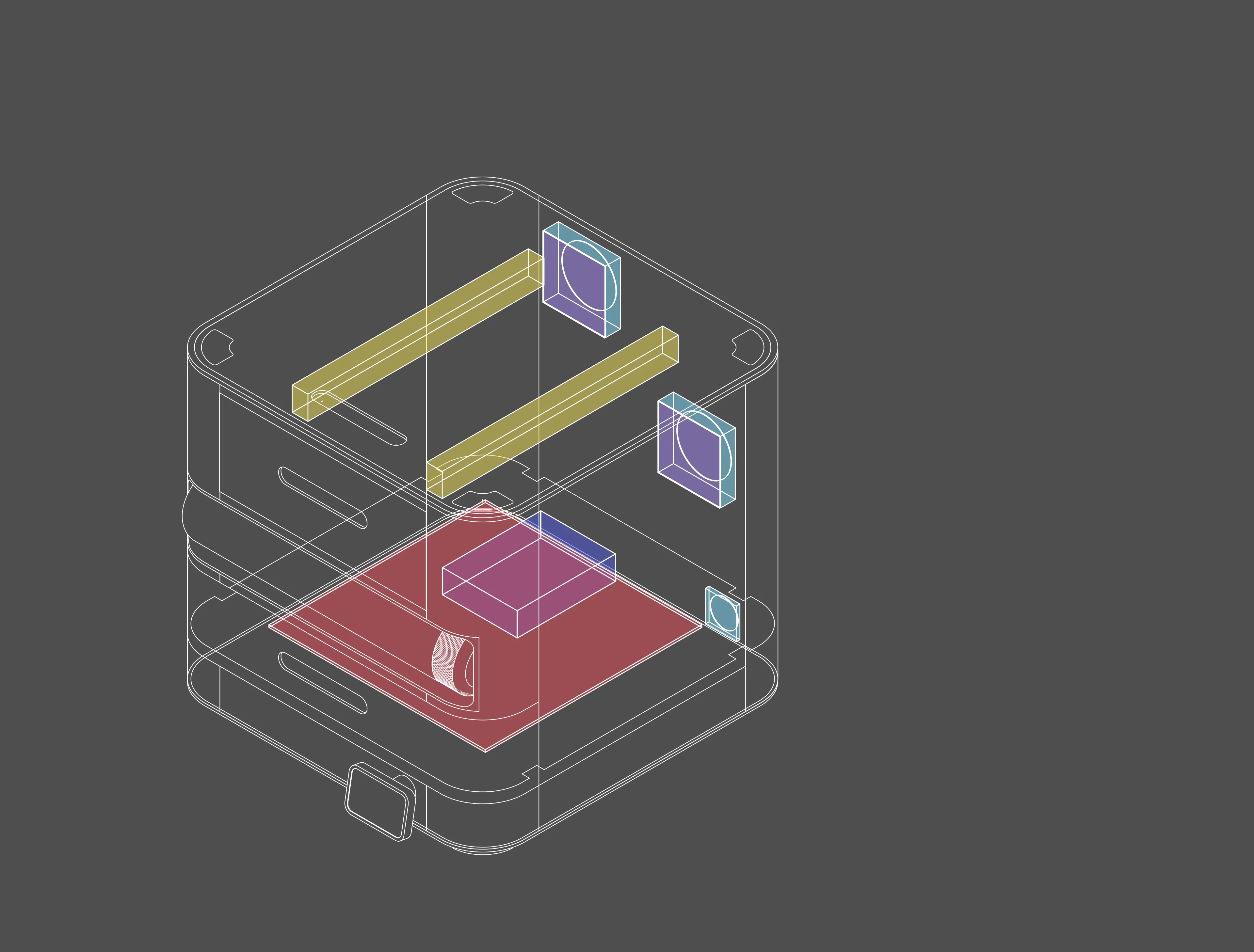
Colour-coded X-ray render of Enclave's internal systems

Heating Pad

Power Supply

Grow Lights

Fans

Filters

The Enclave unit operates on a stage-based system. When prompted, the unit automatically adjusts internal temperature, humidity and lighting according to the growth stage of the black soldier flies. Integrated fans and filters manage the filtration of released gases and odours from within the unit, resulting in a clean, odourless system.
[Graphics, Josh White]

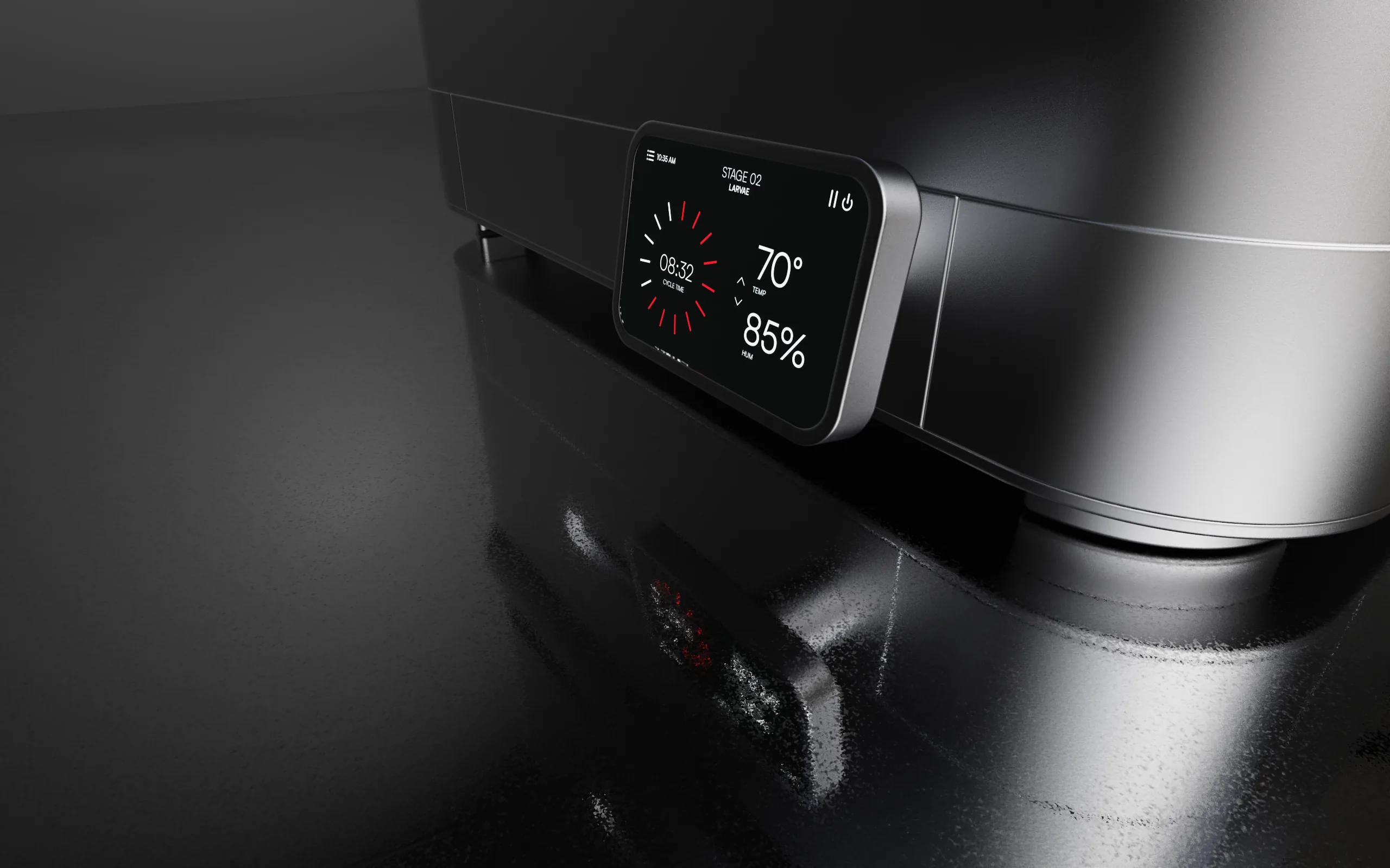
Screen UI

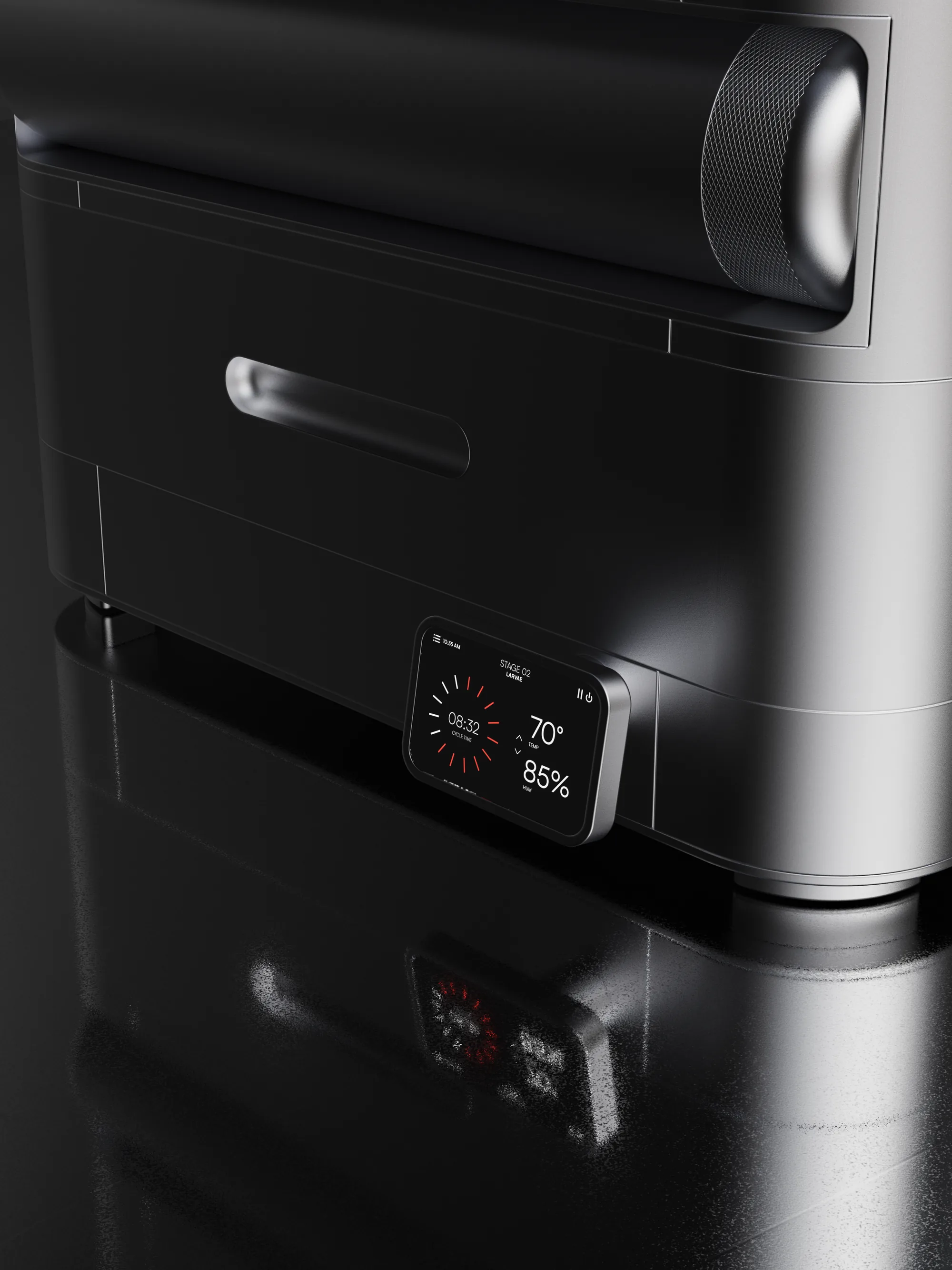
Enclave's screen interface on the unit
Close view of the Enclave screen interface
A screen UI allows the user to examine internal conditions accurately and directly access the controls. The screen displays the black soldier fly’s current stage of development, elapsed time, humidity, temperature, menu and power controls.
[Renderings, Josh White]

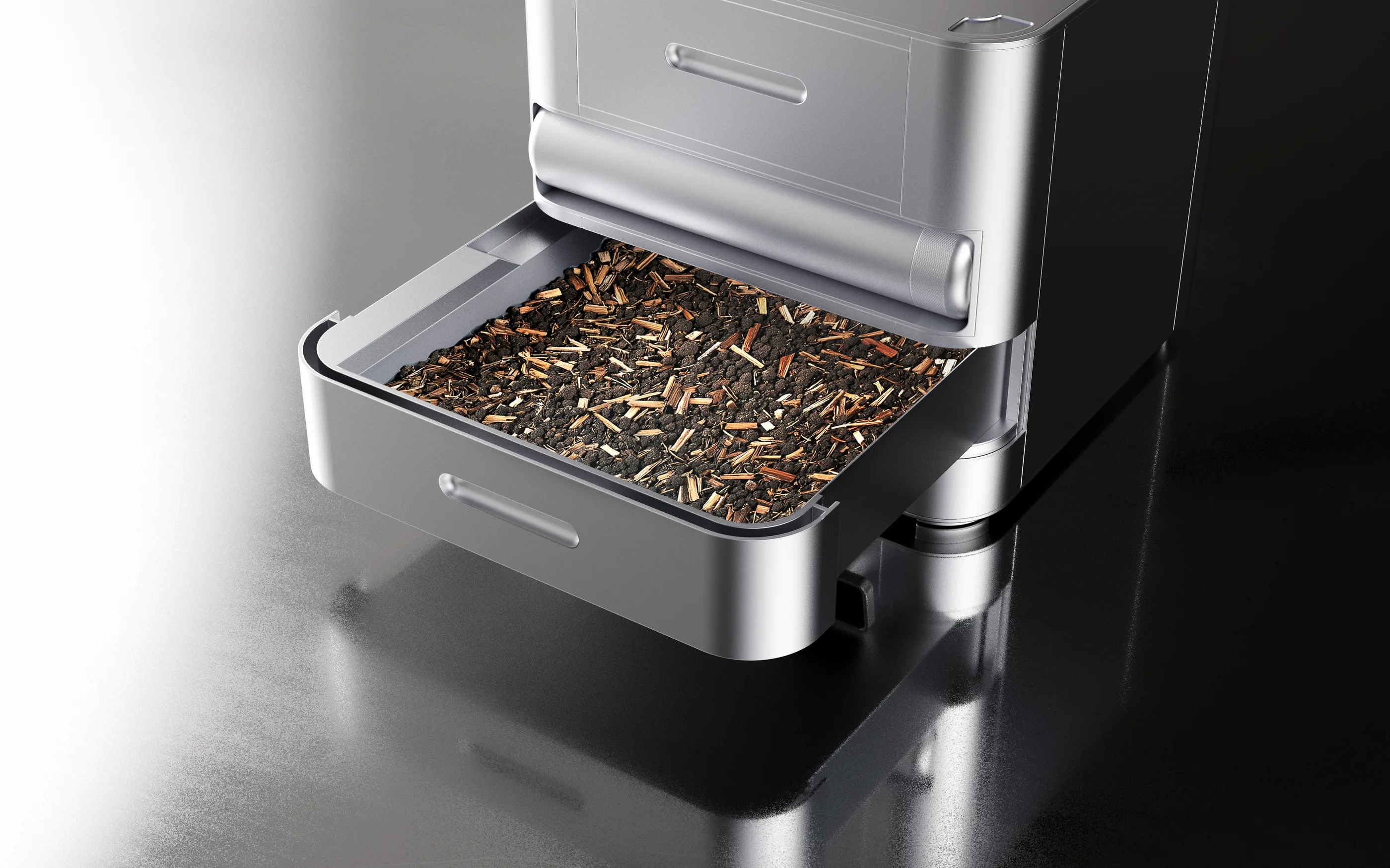
Feed Tray Visualised

The feeding tray pulled out, filled with soil and feed
Visualisation of the feeding tray in its pulled-out state, filled with soil and feed.
[Rendering, Josh White]
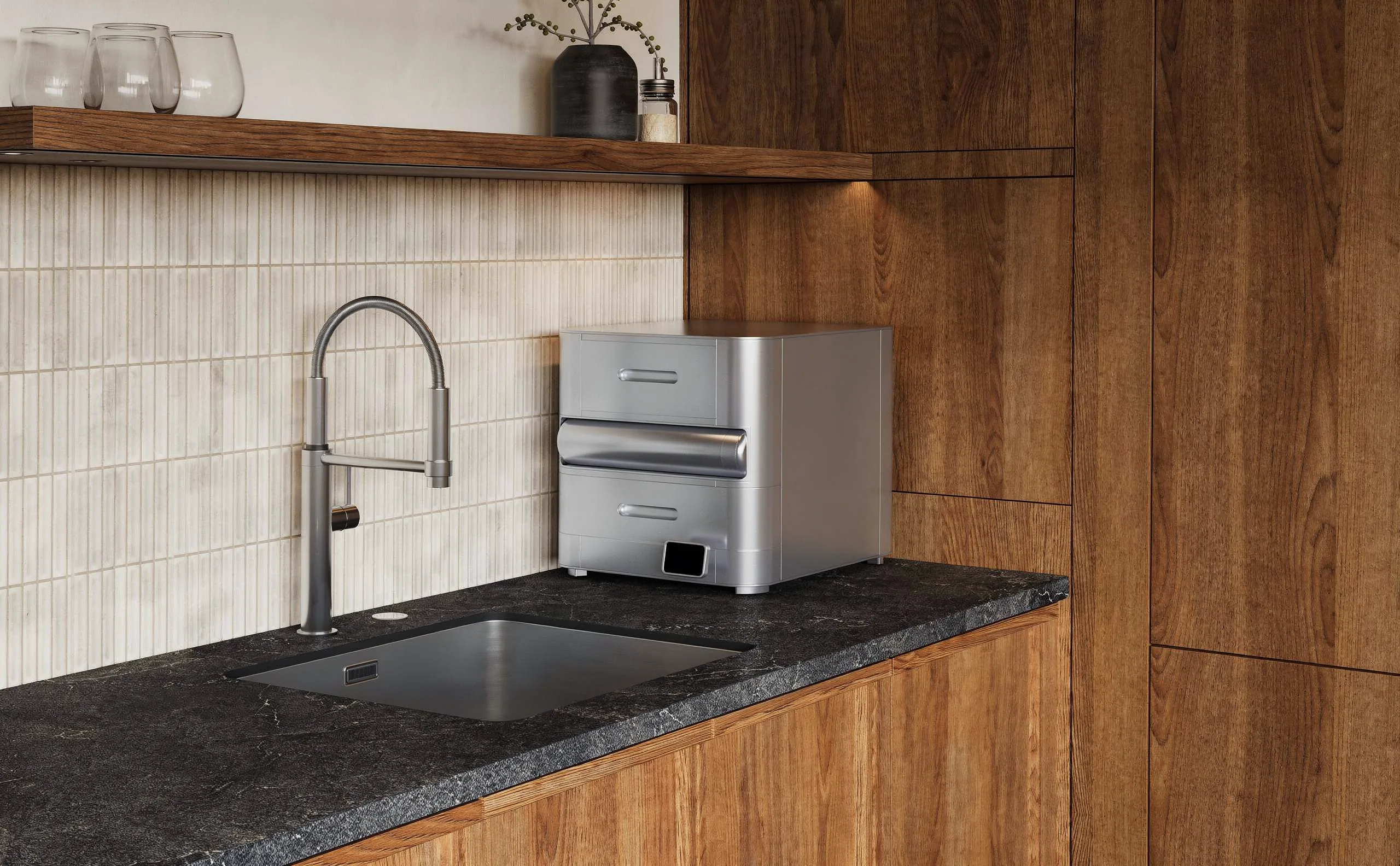
Enclave on a kitchen counter beside the sink
[Rendering, Josh White w/ Weavy]

Outcome Enclave is a proof of concept, shown through research, CAD, system graphics and renders. We didn't build a functional prototype because of the complexity of the setup. The next step would be putting the research into practice: testing the theorised mechanisms for insect incubation, the user experience, the sensors and the sorting system.